MHEC Ruling On UMUC Program Must Be Reversed

Last October, the Maryland Higher Education Commission ruled that University of Maryland University College‘s online doctoral program in community college administration was a duplication of Morgan State‘s face-to-face program and thus a violation of civil rights protections in place for historically black colleges. As a result, UMUC is now prohibited from offering the course in Maryland, although curiously, it can offer the course in the other 49 states.

The MHEC‘s misguided ruling reflects not a bias toward Morgan State as much as it reflects the age of the members of the Commission, with the only member of the Commission younger than 45 being the student representative. The delivery system for higher education in America is being rapidly altered by existing and emerging technologies, and these changes require a modern, more nuanced way of thinking about universities, what they offer and how they serve the needs of the community. I have firsthand knowledge of this, being enrolled in UMBC’s online Instructional Systems Development program.

To anyone paying attention, it is clear that various forms of distance learning will play an increasing role in the delivery system of the nation’s colleges. As this occurs, there will necessarily be overlap with some traditional programs. However, it is a mistake to treat online courses as if they were classroom courses for the purpose of excluding them. We should be encouraging the development of parallel online courses, not shutting them down. And giving Morgan State, a university with limited online experience, two years to create something from nothing, is at best a weak nod in the direction of distance learning.

What the commissioners may not understand is that UMUC’s program isn’t competing with Morgan State’s – it’s competing with other online programs across the country. The MHEC’s decision presupposes that the market served by Morgan State, traditional students available for attendance in a classroom, is the same group of people targeted by UMUC’s online program. Clearly, this is not the case. Online learners are almost always working adults seeking to fulfill their educational requirements while maintaining job, family and other commitments (like me).

The good news is that the university system’s Board of Regents is unwilling to surrender so easily, and will ask the Commission to reconsider. From the Sun article:

“The decision completely ignores a stated priority in the 2009 Maryland State Plan for Higher Education,” wrote Board of Regents Chairman Clifford Kendall in a letter to the commission. “The State Plan supports access to degrees through online programs in order to meet ‘the needs of a largely working, adult population who require a flexible schedule.’ This decision sets a potentially debilitating precedent that will discourage universities from doing the very thing that MHEC’s state plan charges them to do.”

Demonstrating his antiquated view of the situation, MHEC Chairman Kevin O’Keefe said, “I remain convinced that this was an isolated issue.” Even more depressing is O’Keefe’s belief that there will not be a “…strong sentiment among the majority of our members that we should reconsider the issue.”

Perhaps it is asking too much of this particular group of individuals to free themselves of a lifetime of assumptions about higher education and the way this product is delivered to its market. Too often, membership on the MHEC is a reward for a career of service to the community and while this may seem noble, it deprives the commission of the benefit of fresh thinking and new ideas. It may be that the only way for Maryland to become a leader in e-Learning, m-Learning and other non-traditional delivery systems is to replace (or supplement) the existing members of the MHEC with individuals who are not so tied to the past. I just hope that by the time this happens, national leadership in higher education hasn’t fallen too far from our grasp.

Winter Session 2010 – Baby, It’s Quiet Outside


The Winter Session is a great opportunity to grab some extra credits in just a few short weeks of what would otherwise be considered down time. Let’s face it: the winter break is too short to do anything productive, like land a job, so why not get closer to graduating instead of lying on the couch gaining weight?
Still, for those of you who go home every December, and maybe wonder what it’s like around UMBC during the Winter Session, let me give you one word: quiet. Yes, there are classes going on, just not many. Yes, there are students on campus, just not many. Yes, there are activities and fun things to do, just not many. So for those not here, I present this pictorial:

The first thing you’ll see when you arrive on campus are largely unbroken fields of asphalt where automobiles normally are. These are parking spaces, which come out of hibernation in the Winter Session.

Lot 9 at the Engineering Building

Lot 8 next to the UMBC Police station

The next thing you’ll notice is that it’s cold in early January – I mean really cold.

The glass is always half full at the Commons

Aerodynamics could be tested here. Wind chill -10°F.

During the Winter Session, you’re struck by how large the campus feels.

Between AOK and PUP

With no competition, everything seems open, free and orderly.

Clean as a whistle in January

Plenty of available computers at the AOK Library

Need to eat fast? No problem.

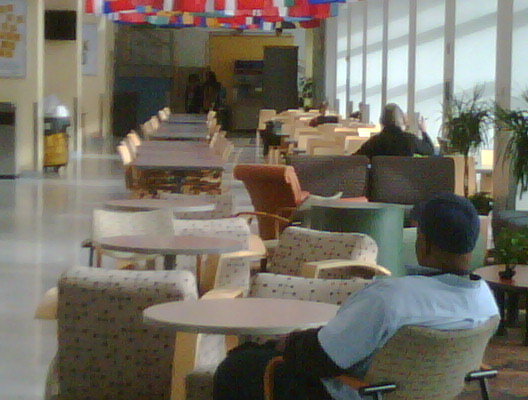
Plenty of open tables

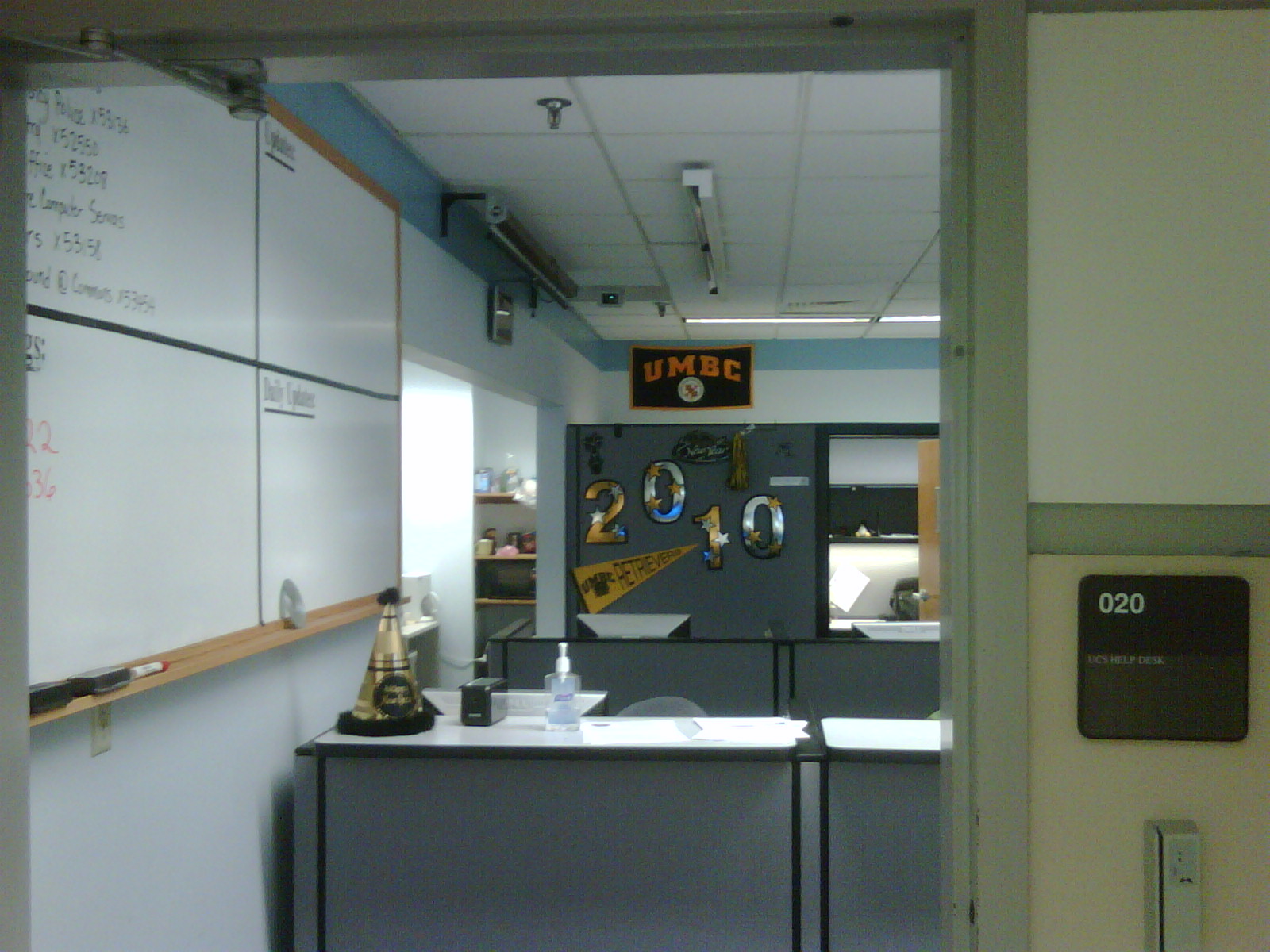
Of course, it's quiet at the Help Desk, too.

No lines in the Bookstore

All clear at the Yum Shoppe

Yep, neat and orderly

Of course, shops have limited hours and some, like Starbucks and Pura Vida Cafe are closed altogether.

No coffee to be had here

So, to all of you at home, stay warm and enjoy your Winter Break. UMBC will be here waiting for you when you get back.

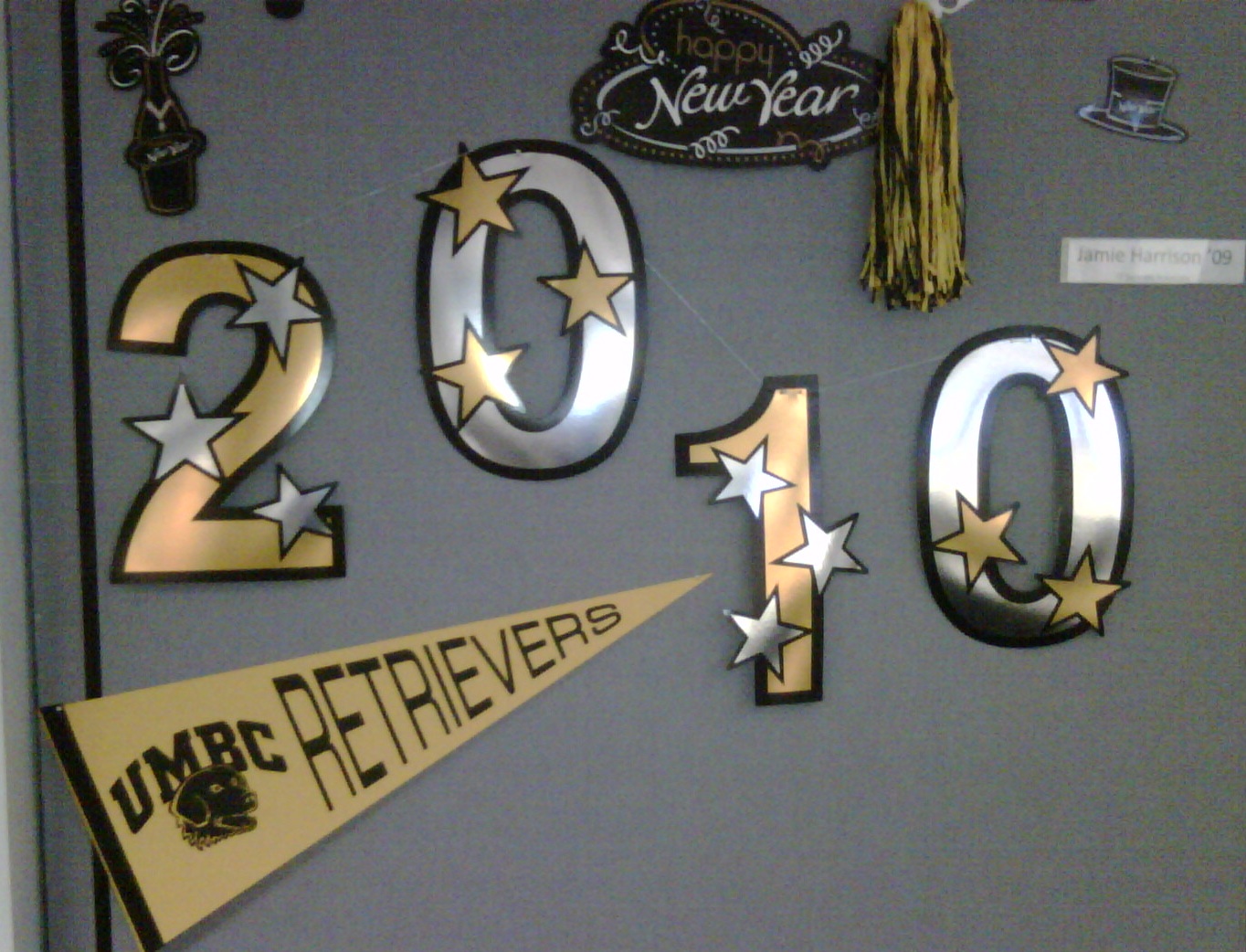
On the wall at the Help Desk, ECS 020

Terry Bradshaw Doesn’t Think Much Of The Ravens This Week

FoxSports asked Terry Bradshaw to “write” a column about this week’s playoff matchups. From what I can discern, it seems that Terry doesn’t like the Ravens’ chances against the Colts:

“Ravins at Coltz: Its the same darn thin fer them ther Ravins as wit them ther Jetz. Them Ravins peepel our luv to run that ther Football. Boy Howdy butt they du! Wir seein that ther guy Joe Flacko ther du a littel bit, butt hes mostlee handin off to that ther guy Ray Rice guy an that Willie MaGahee guy. To hav any kinda chans, them Ravins got to run fer at leest 180 yard, boy howdy! Now, if them ther Ravins can cuntrol that ther clock with that ther run, Baltimoor can limt limmit limit stop the numbr of oportoonities fer Paytin Manin. Butt them ther Ravins hav to scor, to. Them ther Ravins jus cant keep it fer eight nine minits an git three poynts. Butt I don see how them ther Ravins beet them ther Coltz, who our so splosive on awffense.

I been feelin bettur abawt Indee beetin them ther Ravins thin aneebode neckz weekn. Ifn I had to bet on anee of these ther games an I had 100 fer to sav my life ther, Im mor cumfertible betin on Paytin Manin agin them ther Ravins ther. No disspectin now to them, butt, boy howdy I do thin them ther Jetz will cum closir to beetin them ther Charjirs thin them ther Ravins will ginst Indee.

What doed I thin of Paytin winin his foorth NVP? Im not sur it ment as much to him as much it wuld hav ment to that ther Droo Breez as much, who has nevr gotin it, I don thin. I lik to spred this ward round, boy howdy. I meen, you culd giv to Paytin evry yeer, butt how culd you not giv it to that ther Breez guy? What duz he hav to do to git it? What duz Kris Jonsun down ther in Teneseee got to do to git it? I aways ask myselfs who steped up an had credible year. It wuld hav bin grat fer the MFL, becuz Droo is evry bit as gud a guy and a playr as Paytin is.

An I shud know sumthin bout them ther quarbacks, boy howdy!”

Well said, Terry. Well said.

(The FoxSports link to Terry’s column after his editors had polished it for publication.)

The Ravens Road-Field Advantage

Here’s the Ravens’ playoff history (road games in bold):

Jan. 10, 2010 AFC Wild Card Baltimore 33, New England 14
Jan. 18, 2009 AFC Championship Pittsburgh 23, Baltimore 14
Jan. 10, 2009 AFC Divisional Baltimore 13, Tennessee 10
Jan. 4, 2009 AFC Wild Card Baltimore 27, Miami 9
Jan. 13, 2007 AFC Divisional Indianapolis 15, Baltimore 6
Jan. 3, 2004 AFC Wild Card Tennessee 20, Baltimore 17
Jan. 20, 2002 AFC Divisional Pittsburgh 27, Baltimore 10
Jan. 13, 2002 AFC Wild Card Baltimore 20, Miami 3
Jan. 28, 2001 Super Bowl XXXV Baltimore 34, N.Y. Giants 7 (neutral site)
Jan. 14, 2001 AFC Championship Baltimore 16, Oakland 3
Jan. 7, 2001 AFC Divisional Baltimore 24, Tennessee 10
Dec. 31, 2000 AFC Wild Card Baltimore 21, Denver 3

When you look at the record, you see that the Ravens are only 1-2 in home playoff games, and haven’t won a home playoff game since Bill Clinton was president. Yet the Ravens are 6-2 (.750) all-time on the road in the playoffs. Taking it a little farther, the Ravens are undefeated in road playoff games that don’t involve going to Pittsburgh (IMPORTANT: the Steelers aren’t in the playoffs this year).

Playing at home is supposed to be a huge advantage in the NFL. Isn’t that what all of the talk is about in November and December, securing home-field advantage? For some teams, however, there’s another factor that may be even more important, and that’s playing with emotion (as was so clearly demonstrated yesterday). I think for the Ravens, playing with a chip on their shoulders in a hostile environment, knowing that in order to win they must out-physical their opponent and take the fans out of the game, is a key component to victory. Also, don’t discount the ability to more easily get focused on the road, where there are fewer distractions.

Remember Brian Billick’s fiery speech about going into the lion’s den? That speech doesn’t work if your team is the favorite. When you’re at home in the playoffs, you’re probably expected to win. It’s hard to “kick the door in and shout ‘Where is the Son-of-a-Bitch?” when it’s your door and you are the “Son-of-a Bitch.” Let’s admit it, some teams don’t need to play with emotion (Colts, Patriots). The Ravens do.

So, in the future, let’s not root for the Ravens to get home playoff games; we know the winning formula now. But here and now, I suddenly feel really good about our chances, because the road to Miami doesn’t go through Baltimore.

5 Best Ex-Presidents

Some Presidents enjoy history-changing terms of office and find themselves elevated to the Pantheon of greatness. Other Chief Executives, however, do as much (and sometimes more) once they leave office as they ever did in power. Here, then, for your Friday History List enjoyment, are the top five ex-presidents:

5. Herbert Hoover – With his presidency devastated (along with the nation) by the Great Depression, a personally repudiated Herbert Hoover was trounced by Franklin Delano Roosevelt in the 1932 election. Because his image was so tarnished, Hoover largely stayed out of the public eye in the 1930s, resurfacing in 1941 to speak out against American entry into the Second World War, and a possible alliance with the Soviet Union against Germany (he correctly foresaw that helping the Russians defeat Hitler would give them control of much of Europe). After the war, President Truman sent Hoover to Germany to assess its need for economic relief and the state of U.S. occupation; one of Hoover’s innovations was a school meals program for German children Hooverspeisung (Hoover meals). His Hoover Commissions in the years 1947-1949 and 1953-1955, promoted efficiency in the United States Government. The author of over a dozen books, he oversaw the Hoover Institution at Stanford University, a public policy think-tank that had been created in 1919, and did much fund-raising for the Boys Clubs (now the Boys & Girls Clubs of America).

Herbert Hoover

4. Thomas Jefferson – After having served two terms as president, in 1809 Thomas Jefferson retired to Monticello, his plantation in Virginia. Continuing in the spirit of his “Renaissance man” personality, Jefferson studied the classics, worked as an architect, and was a prolific writer of letters, most notably to his former rival John Adams. For many of these years he was occupied with the creation of the University of Virginia, doing most of the architectural design himself. He served as president of the American Philosophical Society from 1797 to 1815.

Thomas Jefferson

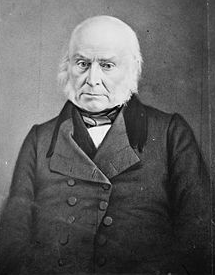
3. John Quincy Adams – Defeated overwhelmingly by Andrew Jackson in 1828, career public servant John Quincy Adams reentered the arena almost immediately, becoming in 1830 the only U.S. president to be elected to the House of Representatives after leaving office. He would faithfully serve in Congress, first as a National Republican and later as a Whig, until his death 17 years later. In the House, he was often the lonely antislavery voice, using parliamentary devices to bring up the subject in spite of the Gag Rule. In 1841, he successfully defended the rebellious slaves of the Spanish slave ship Amistad before the Supreme Court of the United States (Amistad is a great movie, by the way, you should see it). Adams did the work pro bono.

John Quincy Adams

2. Bill Clinton – President Clinton has remained active in both party politics and world affairs since leaving office in 2001. A popular public speaker in Democratic circles, Clinton has also published two books, My Life (autobiography) and Giving: How Each of Us Can Change the World. His William J. Clinton Foundation promotes and provides for a number of humanitarian causes, such as HIV/AIDS programs and the Clinton Foundation Climate Change Initiative; it also funds the Clinton Global Initiative (global public health, poverty alleviation and religious and ethnic conflict). Clinton has traveled to Kazakhstan to help securing mining contracts and to North Korea to negotiate the release of American journalists.

Bill Clinton

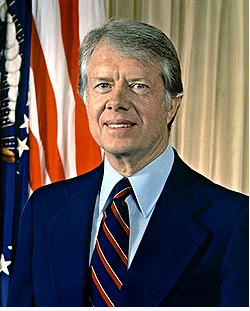
1. Jimmy Carter – Defeated by Ronald Reagan in 1980 after what many have considered to be one of the worst presidencies of the 20th century, Carter immediately got to work. In 1982, he established the Carter Center in Atlanta, to advance human rights and promote democracy by mediating conflicts, and monitoring the electoral process in support of free and fair elections. It also works to improve global health through the control and eradication of diseases, to diminish the stigma against mental illnesses and to improve nutrition through increased crop production in Africa. Carter has traveled the world since his electoral defeat, meeting with world leaders and sometimes negotiating agreements in support of world peace. In 2002 he was awarded the Nobel Peace Prize for his efforts. The author of over two dozen books, he is also well-known for his work with Habitat for Humanity.

Jimmy Carter

At The UMBC Basketball Game (Thanks, UMBC Training Centers!)


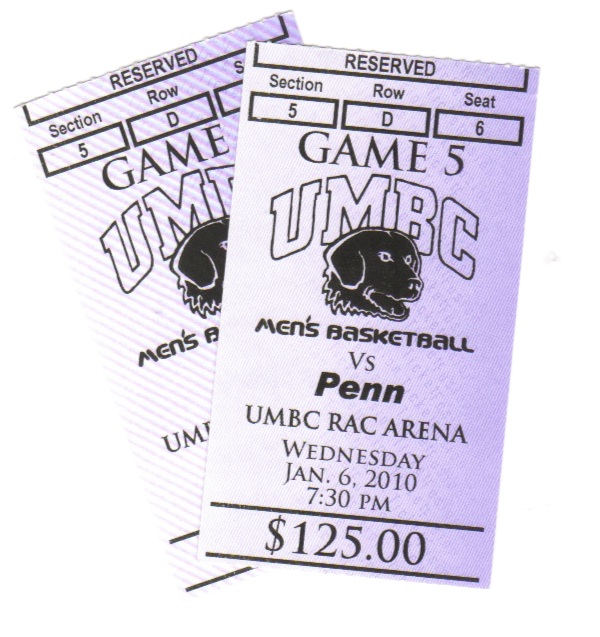
A few weeks ago, I was fortunate enough to win a pair of basketball tickets from UMBC Training Centers. The seats for last night’s game against Penn were in a great location, at center court, just four rows behind Media Row. As a bonus, the women’s team was playing the early game, and my wife and I arrived in time to see the ladies rally from 5 down with 1:36 left, only to have Carlee Cassidy’s potential game-tying shot bounce off the rim as time expired.

Here are some of the images I captured at the game:

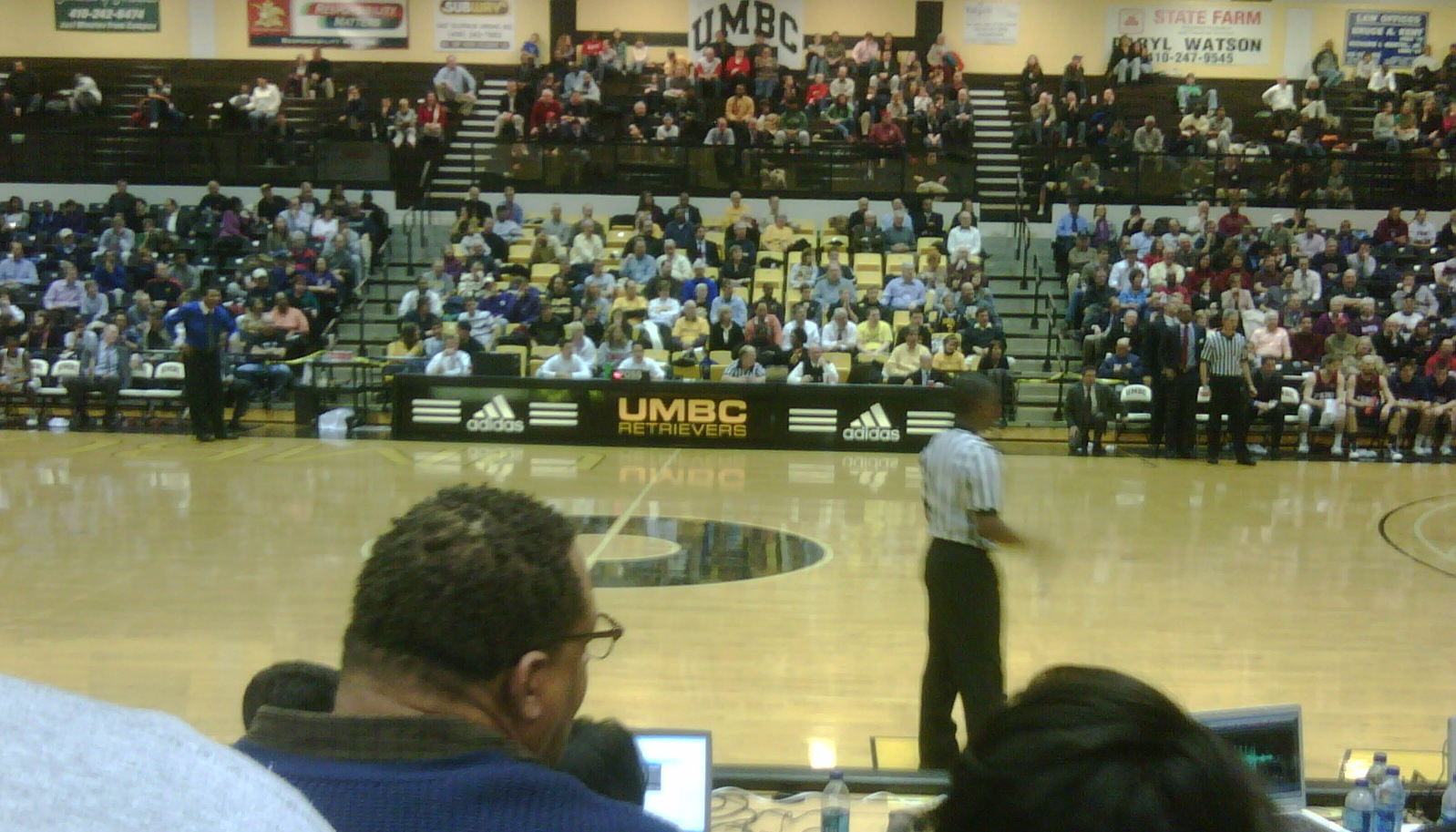
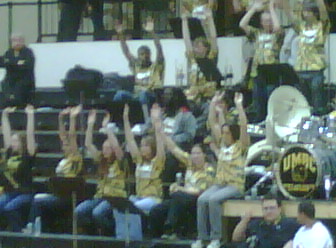
It was a pretty good crowd for a Wednesday during Winter Break.

Damon Massenburg works with me at the Help Desk, and he was at the game, too.

Damon not only works for the Help Desk, he also works for the basketball team. (And who says there's no work out there for students?)

Between games, my wife and I settled into our seats and soaked up the pregame atmosphere. Not everything, I’ll admit, made sense to us.

We watched as stunned coaches struggled to comprehend nervous players' strange behavior before the game.

The UMBC players entered the gym through a giant Moon Bounce.

Just before tipoff, the players gathered to share secrets, oddly enough, in the most public place they could find. It was like they were intentionally excluding us from their club and I felt hurt. And sad.

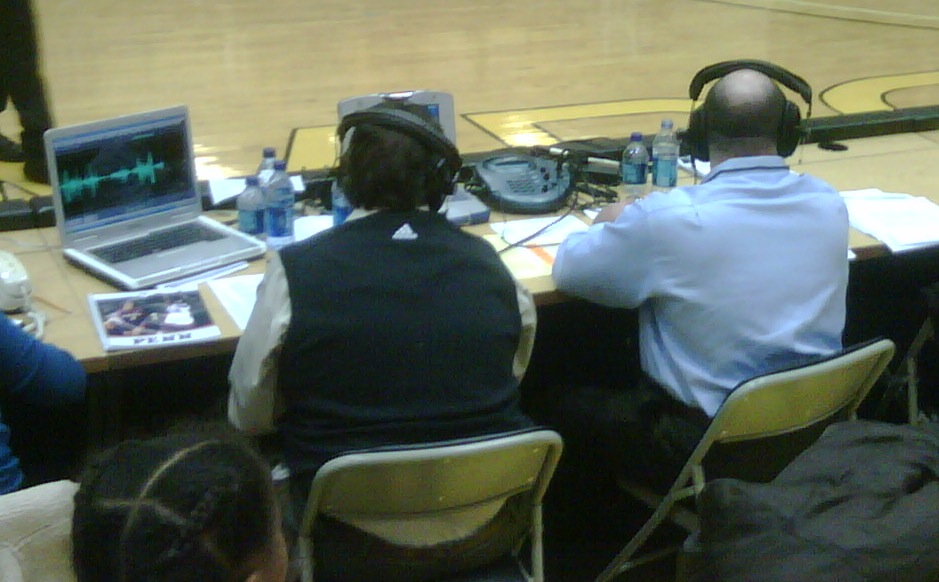
The radio broadcasters had this cool software that told them if they were pronouncing their French vocabulary correctly.

This printer on media row wiped out the paper equivalent of six cords of firewood while I was at the game.

This nice gentleman came by to collect the reams of printed paper and distribute them to random individuals scattered about the gym floor.

At one point, True Grit rushed the floor and tried to incite a rebellion, but no one seemed to notice.

During a timeout there was an attempted robbery; and then the mugger realized that all he was likely to get from a crowd of college students was about ten bucks and half a bottle of Five Hour Energy.

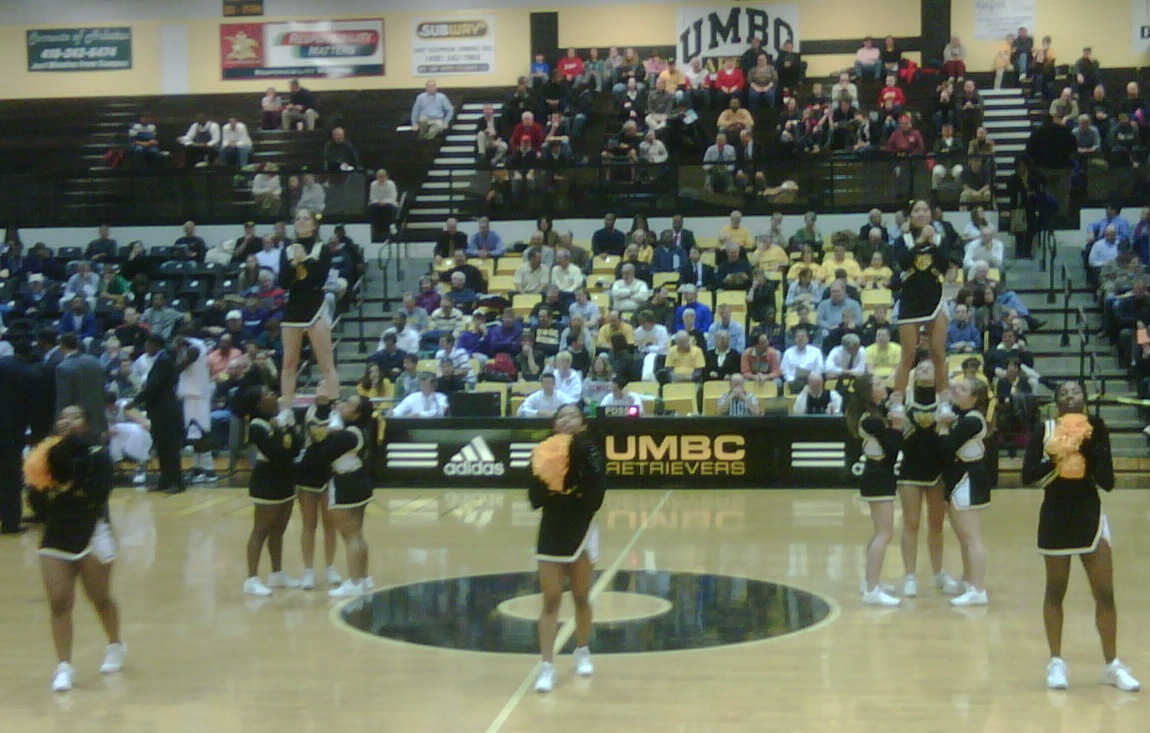
The Cheerleaders demonstrating their patented "Have another cheerleader stand on your hands" stunt. We, along with everyone else present, were very impressed.

"The Stunt" can be successfully deployed in various locations on the gym floor, as demonstrated here.

The radio broadcasters' attention remains riveted on the potential for tragedy inherent in "The Stunt."

The Dance Team, like a rival gang in a Broadway musical, are not impressed by "The Stunt." They take the floor from the Cheerleaders and begin distracting the crowd by remaining perfectly still.

The Cheerleaders, seething from the corner, plot their revenge against the Dance Team.

Finally, in a fit of pique, the Cheerleaders storm the floor, scattering the Dance Team. Once having retaken their ground, they stake their claim by performing "The Stunt."

Eventually, having conceded the night to the Cheerleaders and the near mythical power of “The Stunt,” the game resumes, and UMBC loses to Penn, 82-71.

And that’s what it’s like at a UMBC basketball game – at least the way I remember it.

Irsay’s Shame Lives On As Sports Icon

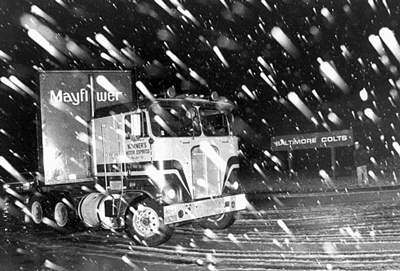
In just the past week, it’s become clear that Bob Irsay’s humiliating decision to slink out of Baltimore on March 28, 1984 has evolved from a historical footnote to an iconic moment. I’ve noticed it coming up more and more often in the national press, sometimes in ways completely unrelated even to the Colts. In short, Irsay’s despicable decision is now a metaphor for something greater than even the theft of a football team. Here’s a sample from just the last few days (if you know of any others, feel free to add them by comment):

Mark Cuban of the Dallas Mavericks:

“Maybe the other leagues, when it comes to supporting them, will pull a Jim Irsay and disappear in the middle of the night,” Cuban said, referring to the Colts’ move from Baltimore to Indianapolis that was actually orchestrated by Jim Irsay’s father Bob in 1984.

William C. Rhoden in the New York Times:

Finally in March 1984, Indianapolis got its team when the owner Robert Irsay sneaked the Colts out of Baltimore in the middle of the night. Indianapolis happily received stolen goods.


Bill Michaels of WTMJ Radio in Milwaukee:

So, that said, you did see many of the starters for the entire game, you just didn’t get the outcome YOU wanted and thus, you Boo. Maybe Bill Polian will load the trucks in the middle of the night and waltz his team to a new destination. Then you’ll have something to boo about, until then, support your team and try to regain some of the class that you lost this past weekend.


Bud Poliquin of the Syracuse Post-Standard:

The management of the Colts saw fit to “throw” the game to the New York Jets by choosing to not field the team that would have given the Colts the best chance to win. I probably should have expected this from a franchise that a few years earlier had seen fit to back up its trucks in the middle of the night and sleaze out of Baltimore.

I get the feeling that my grandchildren will be throwing around a phrase something like “back the trucks up in the middle of the night” without having any idea of its origins – until I sit them down and tell them all about The Grinch Who Stole Football, of course.

ESPN Explains Why I Have No Interest In Sitting Through Avatar


“Outer-Space Cartoon Says Americans Are the Bad Guys: “Millions for defense, not a sixpence for tribute,” Charles Cotesworth Pinckney, once a delegate to the Constitutional Convention, said in 1796. “Millions for special effects, not a Starbucks gift card for writing,” might be the motto of modern Hollywood, at least if “Avatar” is the exemplar. “Avatar” should have been marketed as a cartoon and best animated feature of 2009. The special effects were great — though yours truly increasingly finds computer-drawn special effects boring, since they are so obviously fake. The script was as dull and predictable as the special effects were flashy. Maybe the dialogue sounded better in Na’vi.

Hardly anything was explained — so let’s start with why the whole plot was set in motion in the first place. Sinister humans are bent on removing peace-loving blue aliens from a point on Pandora above some minerals the sinister humans want to strip-mine; the peace-loving natives won’t move because the place is sacred ground. Reader Bryan Law of Independence, Ohio, notes: “Even today, horizontal drilling means you don’t have to destroy the surface above a resource to obtain it. So why wasn’t the problem on Pandora solved by horizontal drilling? Don’t tell me that 150 years from now, humanity has become capable of interstellar travel, yet forgotten a basic mining technique.”

The mineral is an anti-gravity substance that floats. Midway through the movie, we learn there are entire mountains of it floating above Pandora. So why not mine the floating mountains, where no Pandorans live, rather than go to war with the natives? The clichéd super-heartless corporation that wants the mineral is depicted as obsessed by profit. War is a lot more expensive than mining! If profit is what motivates the corporation, war is the last thing it would want.

Because hardly anything in the movie is explained, we never find out what nation or organization has built a huge base on Pandora, then brought along an armada of combat aircraft. The Earth characters all look, act and talk like Americans — in fact, slang hasn’t changed in 150 years! But does this project have some kind of government approval, or is it an interplanetary criminal enterprise? It’s hard to believe that 150 years from now, humanity’s first interaction with another sentient species would be conducted without any public officials present, but that’s what is depicted.

And who are the gun-toting fatigue-clad personnel commanded by the ultra-evil Colonel Quaritch — are they regular military, mercenaries, private security contractors? Audiences never find out. They’re just a bunch of trigger-happy killers who want to slaughter intelligent beings, and all of them but one do exactly what Colonel Quaritch says, even once it’s clear Quaritch is insane. The colonel must work for somebody — for the Pentagon, some government agency, for the corporation. So why isn’t he subject to supervision? No organization would entrust a project costing trillions of dollars — a town-sized facility has been built five light-years away — to a single individual with unchecked power. You’d worry that the single individual would commit some huge blunder that wiped out your trillion-dollar investment, which ends up being exactly what happens. I found the colonel with absolute authority a lot more unrealistic than the floating mountains.

Then there’s director James Cameron’s view of military personnel. If I were a military man or woman, I would find “Avatar” insulting. With one exception, the helicopter pilot played by Michelle Rodriguez — her character is twice referred to as a Marine, suggesting the military personnel are regular military, not mercenaries — all the people in fatigues are brainless sadists. They want to kill, kill, kill the innocent. They can’t wait to begin the next atrocity. It’s true that the U.S. military has conducted atrocities, in Vietnam and during the Plains Indians wars. But slaughter of the innocent is rare in U.S. military annals. In “Avatar,” it’s the norm. The bloodthirsty military personnel readily comply with the colonel’s orders to gun down natives. No one questions him — though in martial law, a soldier not only may but must refuse an illegal order. Plus the military personnel are depicted as such utter morons — not a brain in any of their heads — that none notice the TOTALLY OBVIOUS detail that Pandora’s unusual biology will be worth more than its minerals. Yes, movies traffic in absurd super-simplifications. But we’re supposed to accept that of the deployment of several hundred, every soldier save one is a low-IQ cold-blooded murderer.

What does “Avatar” build up to? Watching the invading soldiers — most of whom happen to be former American military personnel — die is the big cathartic ending of the flick. Extended sequences show Americans being graphically slaughtered in the natives’ counterattack. The deaths of aliens are depicted as heartbreaking tragedies, while the deaths of American security forces are depicted as a whooping good time. In Cameron’s “Aliens,” “The Abyss” and his television show “Dark Angel,” U.S. military personnel are either the bad guys or complete idiots, often shown graphically slaughtered. Cameron is hardly the only commercial-film director to present watching evil U.S. soldiers slaughtered as popcorn-chomping suburban shopping mall fun: in the second “X-Men” flick, U.S. soldiers are the bad guys and graphically killed off. Films that criticize the military for its faults are one thing: When did watching depictions of U.S. soldiers dying become a form of fun?”

Well said, Mr. Easterbrook. Well said.

I Dreamed A Dream of Football at UMBC

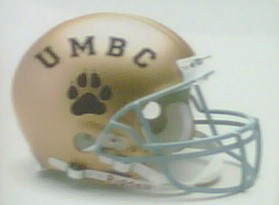
Walking in the Commons between the Bookstore and the Flag Court, I looked up at a large poster and my eyes became fixated on this sight:

My heart raced and my imagination exploded with visions of Saturdays spent at UMBC Stadium, cheering on the Fighting Retrievers football team. Without stopping for even a moment to consider family commitments or mortgages, I envisioned spending countless hours and untold treasure on what would surely become the focal points of my future autumns. In my mind’s eye, I could easily see the enraptured alumni, gathering in the parking lots to tailgate and celebrate the arrival of football at UMBC. It had happened at Stevenson, and now it was happening here!

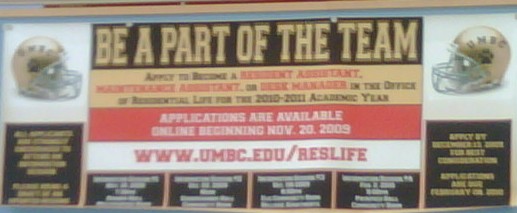
And then, as quickly as the dream could be dreamed, it was just as certainly shattered as I read the rest of the banner:

It was all a promotion for open positions at the Office of Residential Life. There would be no football team, no Saturdays spent on campus in mad delirium, no suddenly galvanized alumni flooding the campus each Fall at Homecoming.

Yes, one day I dreamed a dream of football, but it was only that – a dream. But even if I only lived it for a moment, the dream was sweet indeed. And as I walk our campus now, I still can hear the roar of the crowd echoing in my ears, as if calling to me from beyond the hills across the Loop, tantalizing me with what might have been. And what might still someday be.

Ravens Traditions: The Flag Flies Again!

My Ravens Playoff Flag

Because I’m a bit OCD, I tend to accumulate a lot of what I call “traditions.” These are things that must be done at certain times, in certain ways, every time. My holiday routine is a prime example. Another example are my Ravens routines.

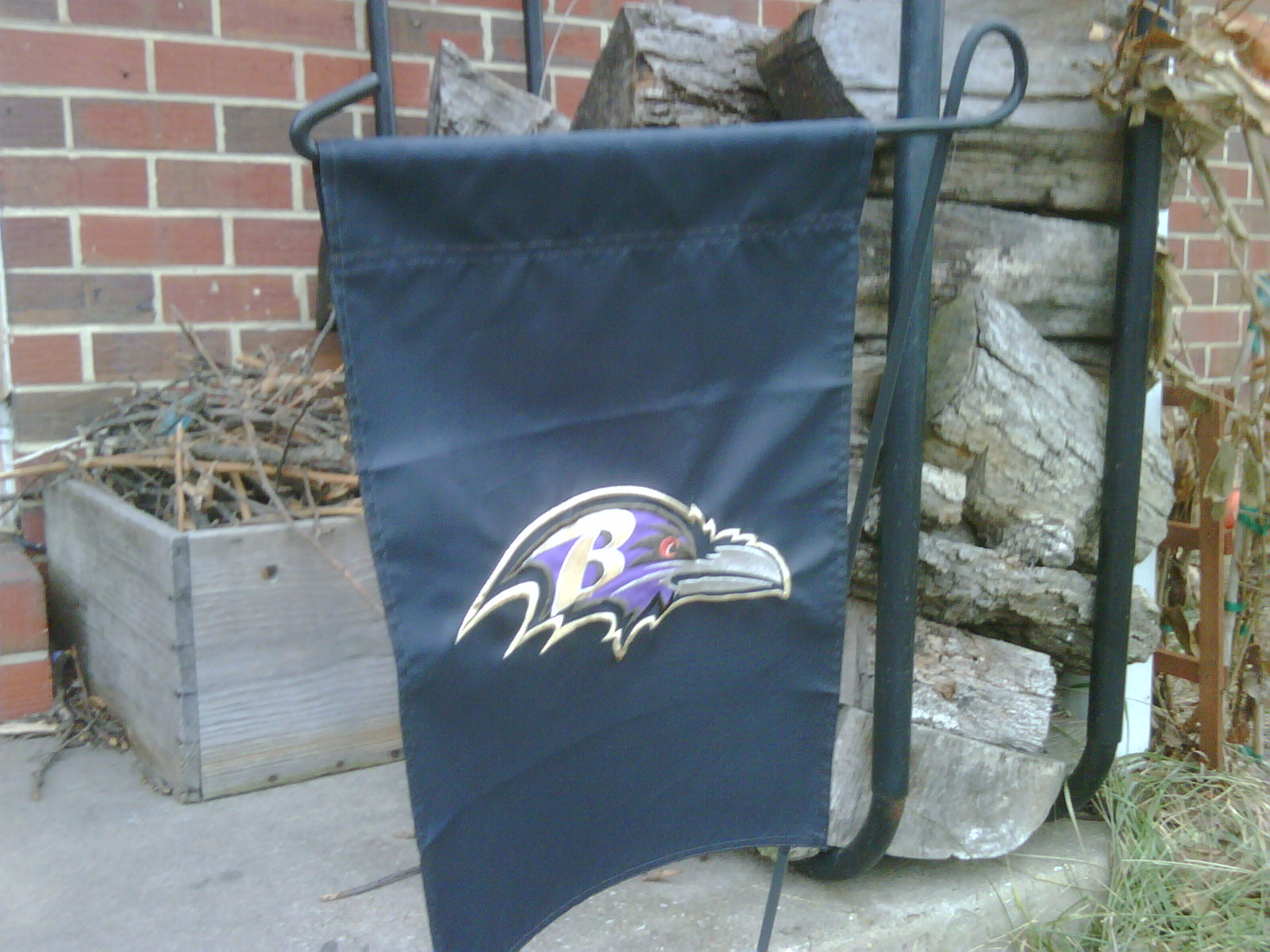
We have one of those decorative seasonal banner posts in front of our house, on which we rotate appropriate displays. During the summer months, from it hangs a rustic American flag-type banner. At the start of each Ravens season, I hang the Ravens banner, which will remain until the team takes its first loss, after which time it will be replaced by our generic autumn banner. This banner returns in January should the Ravens make the playoffs, and stays until they are eliminated.

Similarly, the 3′ x 5′ Ravens flag is hoisted on the day the Ravens qualify for the postseason, and remains until they get knocked out, when it is immediately removed. When I come and go from my house, seeing that the big Ravens flag still flies can be a misty moment.

Inside the house there are traditions, too. As a part of my Christmas decorations, I use intertwined purple and gold garland around the living rooms windows to reflect my allegiance not just to the Ravens, but also to my secondary team, the Minnesota Vikings. (I became a Vikings fan at age 7, back when Fran Tarkenton and the Purple People Eaters ruled the NFC. They were a good backup to the Colts during some lean years, and then, when the Colts left, the Vikings filled in quite nicely until the Ravens arrived.) This garland will be in place until neither the Ravens nor the Vikings are alive in the playoffs.

Some items exist without regulation, such as the inexpensive vinyl tablecloth, which is in use for much of the football season, but is removed occasionally for cleaning:

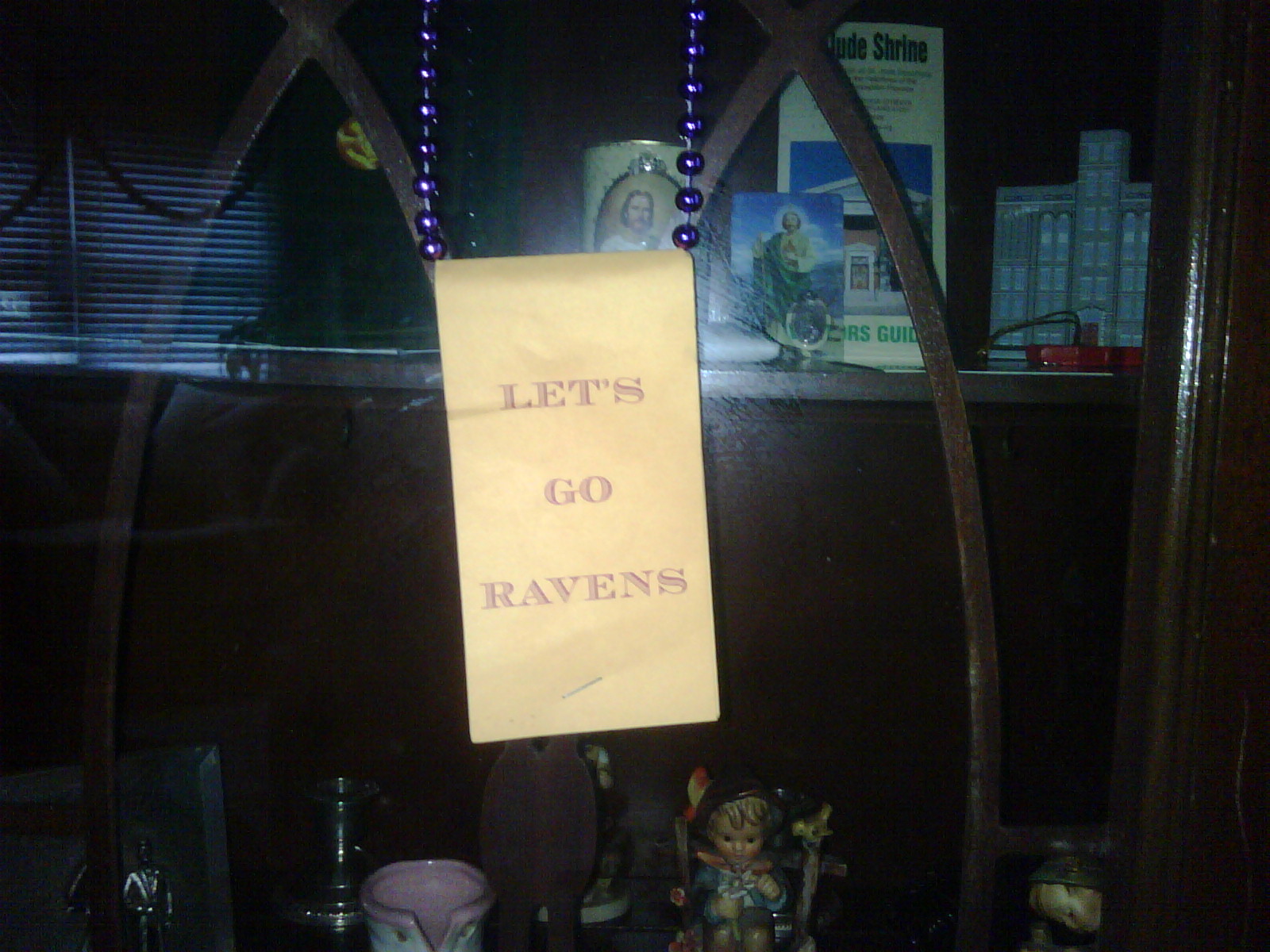
And then there are other items that get added haphazardly, and, because they are small, end up in place year-round. Falling into this category is a beaded necklace with a paper message that was given to us sometime last year, and now permanently resides on a curio cabinet in the living room.

Of course, there are apparel traditions to uphold as well. While the Ravens still play, I observe Purple Fridays at work, sometimes adding my gold UMBC necktie. My wife, who works in the medical field, wears Ravens scrubs to work on the Monday following a game. On game days in warm weather, I wear my Ray Lewis jersey, switching over to one particular long-sleeve jersey/sweater once the weather shifts. My wife usually wears her Joe Flacco jersey, but she’s not neurotic about it like I am.

So, now that the Ravens are in the playoffs, the flag flies once more. Let’s just hope it has a chance to get a bit weathered before I’m forced to haul it down again.