I’m a Mac; No, I’m a PC; No, Wait…

The Help Desk gets phone calls occasionally from Mac users, and this is an area where I have little practical experience. So, last week, hoping to make myself a more well-rounded Help Desk Support Staffer, I acquired my first Mac.
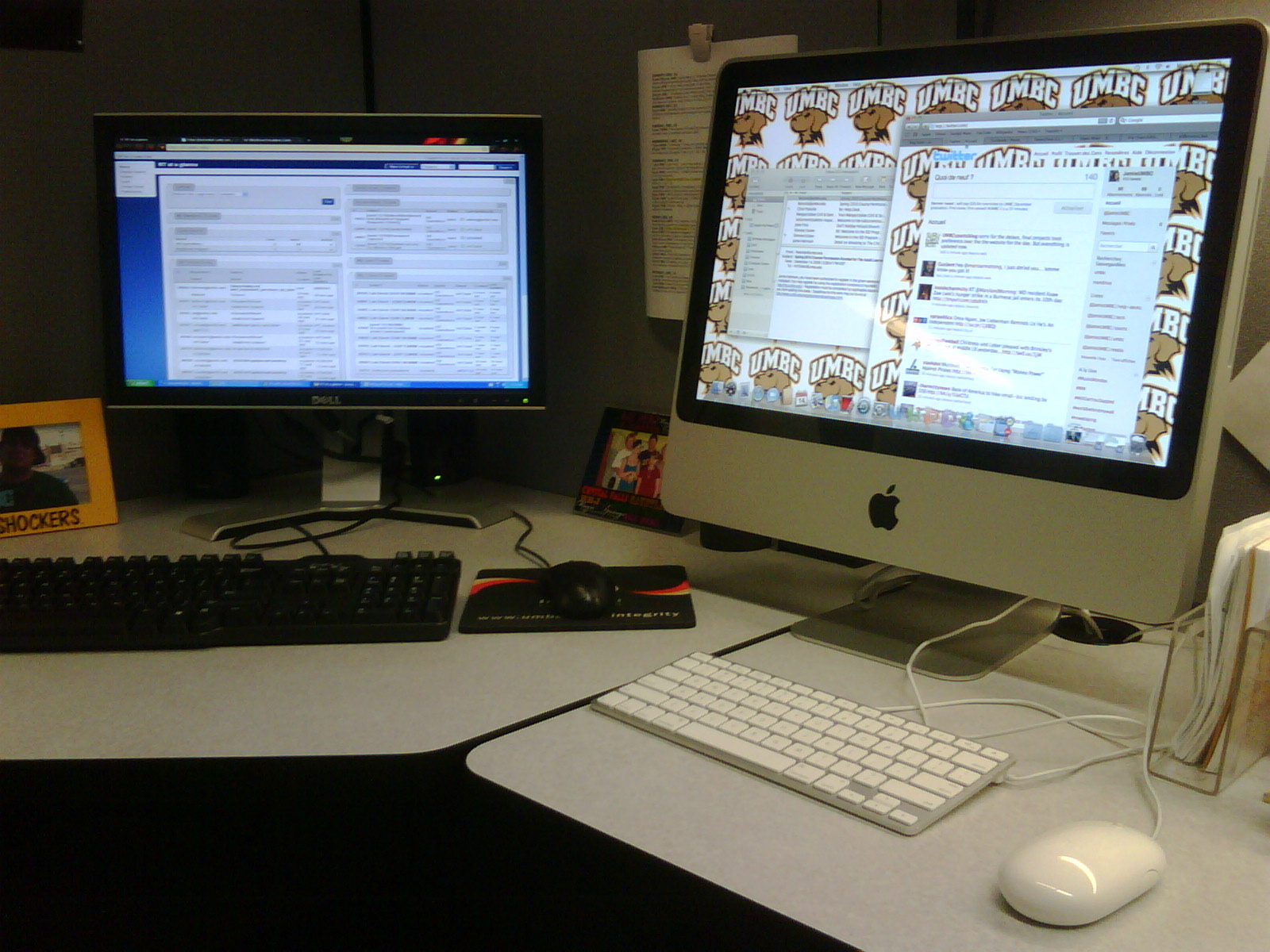
My first assignment was to do a clean install of the new Snow Leopard operating system. I’ve done hundreds of operating system installs in my life from Windows 95 to Linux Fedora 12, so I figured that installing a Mac OS from a disk would be no big deal. I was wrong. The entire process, from the keyboard shortcut that enables the Mac to boot from disk, to the not-very-intuitive partitioning process, was so alien to me that I ended up having someone from Desktop Support just do it for me. Linux looked much easier to install, and that’s saying something.

Once the OS was installed, then I had to download a few updates and reboot a couple of times. The Mac’s reboot process was fast, so this ended up being no big deal. Next, I installed Microsoft Office for Mac 2008, which took almost as long as did the OS install. After that was done, I set up Apple Mail, which was easy, since the icon (a postage stamp with an Eagle on it) is on the Dock at the bottom of the screen, and the two or three settings are the same as in any other mail client. Finally, I was ready to use my Mac.

Almost all of the work I do is through systems that are accessed by a web browser, in this case Apple’s Safari, which reminded me a bit of the Google Chrome browser I had been happily using on my PC. Safari is fast and has the thumbnail collage view of recently visited pages and bookmarks that I’d come to rely on in Chrome.
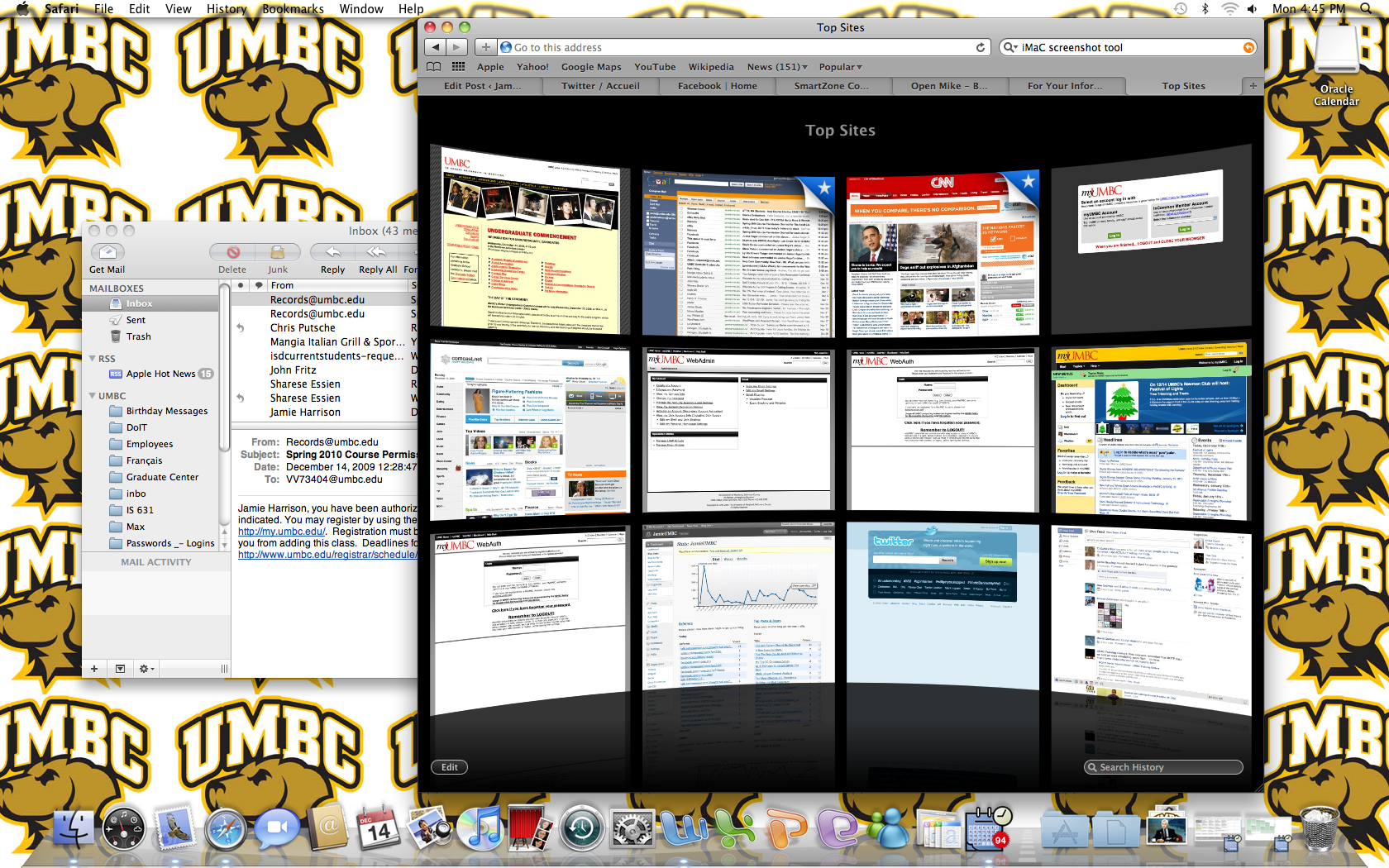
I quickly discovered that Internet Explorer keyboard shortcuts mean nothing in Safari; in Safari, F5=Command+R, for example. Also, when a word is misspelled, I was used to using my right-click function to access the auto-correct; in Macville, this is done by Ctrl+left-click. This is where I made a neat discovery, which was that the Mac/Safari tricks worked on Chrome! One thing I don’t like about Safari (or Firefox for that matter), is that the address in the address bar doesn’t highlight with just one click. This means that if I want to enter a new address, I have to drag the cursor across the address; if the address if terribly long, this might require multiple attempts. (In Chrome, the address bar doubles as a Google search bar, too.)

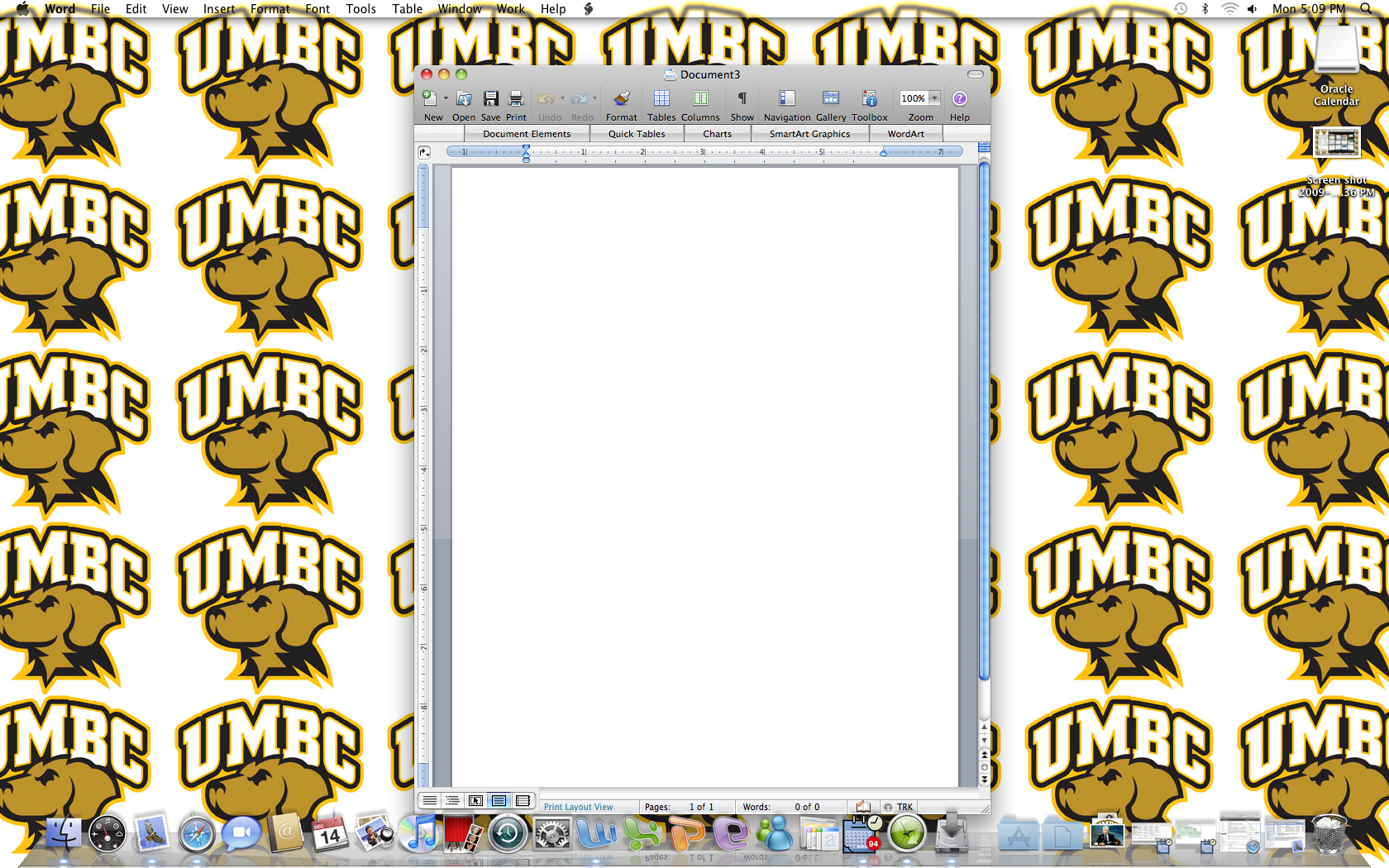
I haven’t had to use Word for Mac much, but so far, I’m not impressed. At first glance, almost all of the radio buttons I’d come to depend on in the Windows version is gone. After a little exploration, it looks like the functionality is there, but it’s just inconvenient to access. Perhaps after I get used to it, I’ll find that it’s no different, but for right now, it’s awkward.
I really like Apple Mail. It’s easy to use, it highlights messages that are associated with each other (Re: ‘s) and when you send a message, it makes a cool “whoosh” sound. When a message arrives, there’s an audible alert and a number (representing unread messages) appears over the postage stamp icon.

Another big plus with the iMac is the coolness factor. When you hide a window, the window seems to be vacuumed into the dock, where a tiny image of the window remains visible. Also the screen is bigger and brighter than my PC’s, with a built-in webcam that takes still photographs with a pre-installed program. The dashboard (represented by the black circle icon second from the left of the dock) is a neat feature, especially if you find yourself using the calculator a lot.
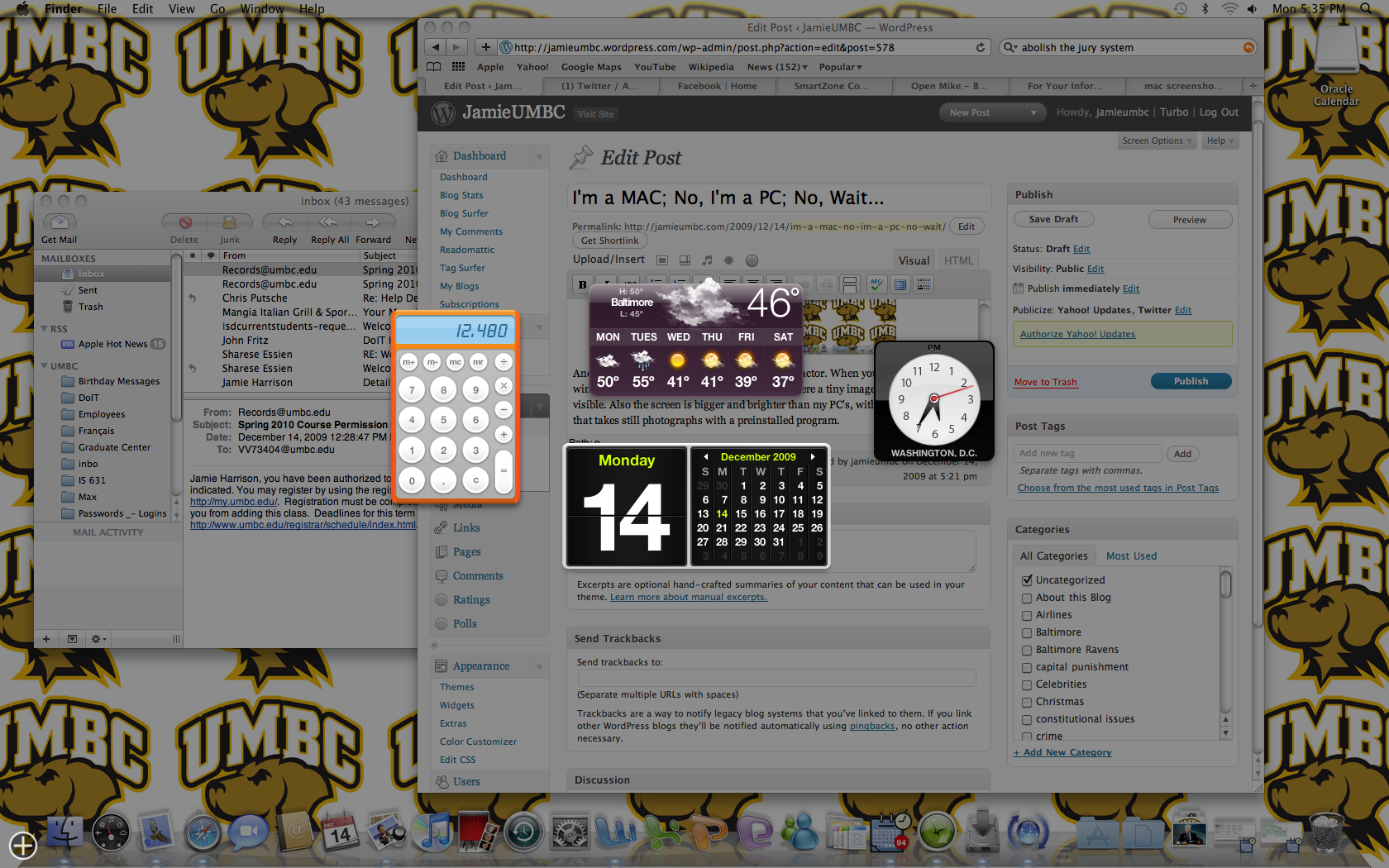
Clicking the dock icon makes the dashboard appear; clicking anywhere outside of one of the four apps makes it vanish.

The mouse is a bit strange. It feels small, and not having a right-click button takes some getting used to. The keyboard I am not in love with. It’s like an abbreviated version of a normal keyboard, and most notably lacks the numeric keypad that I’ve grown dependent on.

One thing that is very nice about the Mac is that there’s no tower for me to knock my knees against. Everything is self-contained behind the monitor, including the CD drive, and the only cords leaving my desk area are the power cord and the ethernet cable, which means there is very little wasted space.

So far, I really like the iMac, although some things have to be relearned and will take some getting used to. Of course, I wonder if I like it so much that I’d be willing to spend an extra $700 on it in the real world. Probably not, but that’s one of the perks of working in IT, right?

I’m also wondering whether, as a Mac user, I’m required to grow a “cool-guy” half beard, like Justin Long.

Justin Long - He's a Mac
The Jury System Should Be Discarded

The right to a trial by a jury of one’s peers has been a foundational right in Western legal tradition for many centuries, and is present both in English Common Law and the United States Constitution. Americans are raised to believe in the iconic (and stereotypical) image of twelve ordinary, reasonably intelligent citizens taking their duty seriously and returning a fair and impartial verdict. We persist in the delusion that twelve individuals of no particular training or experience will interpret and apply the law better than an individual who has spent his life being educated and trained to do just that. This is, I suppose, a byproduct of our narcissistic belief in the “wisdom of the common man.”

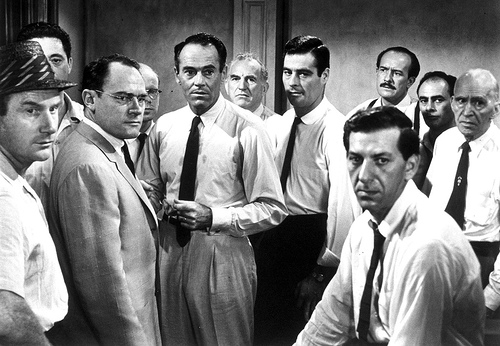
12 Angry Men - The 1957 classic that helped create the fantasy jury stereotype.

The reality is that what we end up with, more often than not, are twelve people selected not on the basis of their qualification to stand in judgement of a particular case, but precisely for their lack of qualification and knowledge about the central issues of the case at hand. For example, as potential jurors are being screened by the attorneys, if a citizen admits to being an expert in case-law regarding the key elements of the trial, he or she will be quickly dismissed. On the other hand, should a potential juror admit to being so indifferent to legal issues as to be unaware of even the illegality of the charges against the defendant, this person is considered an excellent candidate for the jury. The more serious the case, the more vigorous will be the search for the perfect juror.

Who is the perfect juror? Lawyers search for jurors who are so dimly aware of, and participate so infrequently in, their society that they have never come into contact with anything that might have provided them with information that they might use to form an intelligent and informed decision. This is because the attorneys want the jurors to only be conscious of information provided to them in court. A perfect juror, in their eyes, is a blank slate who can be effectively swayed by the words of lawyers. It makes no difference that adults who are “blank slates” are in this condition for a reason. So, by the process of negative selection, we arrive at a jury that is populated with individuals who are the least likely to employ complicated, nuanced reasoning when presented with evidence in court.

Having a jury of simple folk may have been workable in an age where the Cotton Gin represented the height of ingenuity, but is simply inadequate in modern times. Much of the physical evidence that jurors are expected to interpret today is highly technical, and many of the terms that will eventually decide guilt or innocence have definitions with multiple layers that require a depth of understanding to apply in real life. If the jury, during deliberations, recognizes this dilemma and asks for clarification or explanation of terms, they are usually told that this assistance would be inappropriate. This leaves them to grope about for a verdict with the same utter ignorance with which they first came to the courtroom. Confused jurors tend to ignore evidence, which favors the defendant (i.e., the O.J. Simpson jury).

The Simpson Jury (sketch by Bill Robles) - The forgettable 1995 reality show that demonstrated one of the major failings of the modern jury system.

Sometimes, jurors attempt to overcome their ignorance by educating themselves on the issues, but even this genuine search for truth is not allowed. In an article in the Baltimore Sun, this new concern about jurors using the internet to gain access to information not presented during the trial is examined. Judges, lawyers and legal experts wring their hands over cases of jurors doing “research” on the case as they attempt to reach a fair verdict. Remember, the perfect juror is clueless and remains completely dependent on their case’s lawyers for information. Curiosity, even in a quest for justice, is not permitted.

Another problem presented by the existence of advanced technology is what legal experts call “The CSI Effect.” This refers to the often unattainable expectations that many jurors have about the quality and breadth of forensic evidence in criminal cases. Many times, these “blank slates” sole knowledge of the judicial system comes from watching television programs where every crime leaves plenty of damning physical evidence, evidence that is scientifically conclusive, indisputable and easily understood by laymen. When prosecutors fail to present evidence that meets these unrealistic expectations, jurors assume that their case is weak and acquit the defendant.

Television and the media in general are responsible for another problem with juries: the celebrity juror syndrome. In high-profile trials, jurors may be oblivious to practical information that they could use to render an intelligent verdict, but they are very aware of the presence of cameras and reporters. Realizing that their willingness to participate in the media frenzy could give them their “fifteen minutes” of fame,  some jurors might begin to weigh the relative value of a particular outcome to their quest for celebrity.

Up to this point, I have been addressing criminal cases only, but I would be remiss if I didn’t mention civil juries. We have all read about outrageous monetary penalties levied by juries as the result of lawsuits, and perhaps wondered how such a figure might have been arrived at. This exposes another failure of the jury system: human emotion. In our stereotypical jury, emotion plays no role whatsoever in the verdict; only the evidence and the law are considered. In the real world, when witnesses are hurting, and when testimony is riveting and heartbreaking, juries respond favorably. Once you’ve seen the tears and heard the story, it becomes comparatively easy to punish the cold, impersonal corporation by giving away their money. It also makes you feel good, sort of like Robin Hood. Who wouldn’t want to be Robin Hood?

Having weighed the evidence myself, I am prepared to overturn the dysfunctional jury system and relegate it to the annals of history. I realize, though, that to do this, laws, and sometimes constitutions, would have to be rewritten. Since legislatures are dominated by elected lawyers and lobbyist lawyers, I’m also smart enough to realize that it will never happen. So it goes.

Top Ten Decisive Battles in Western Civilization

Today’s Friday History List examines the ten most decisive battles in the history of Western Civilization. These are battles that, by their outcomes, changed the course of events in a very dramatic way. They are listed chronologically:

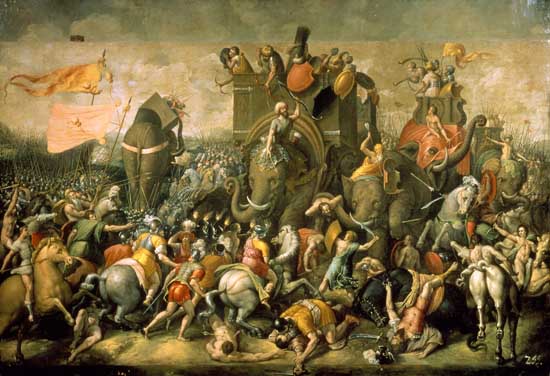
202 B.C. – Zama. The Romans, commanded by Scipio, routed Hannibal and drove him from the field. Carthage was removed as a rival to Rome in the Western Mediterranean, and Rome became the dominate power in Europe. This in turn ensured that western Europe would become subject to heavy Latin and Greek influences.

312 A.D. – Milvian Bridge. Constantine, having seen a vision of victory (“in hoc signo vinces“), defeats Maxentius‘ armies to become the master of first the Western Roman Empire, and eventually all of it. Fulfilling a pre-battle vow, he converts to Christianity, taking all of the Empire with him.  At the Council of Nicea, Constantine assigns blame for Christ’s death to the Jews, and he makes Christianity the predominate religion of his empire. Much of Europe’s future has just been written.

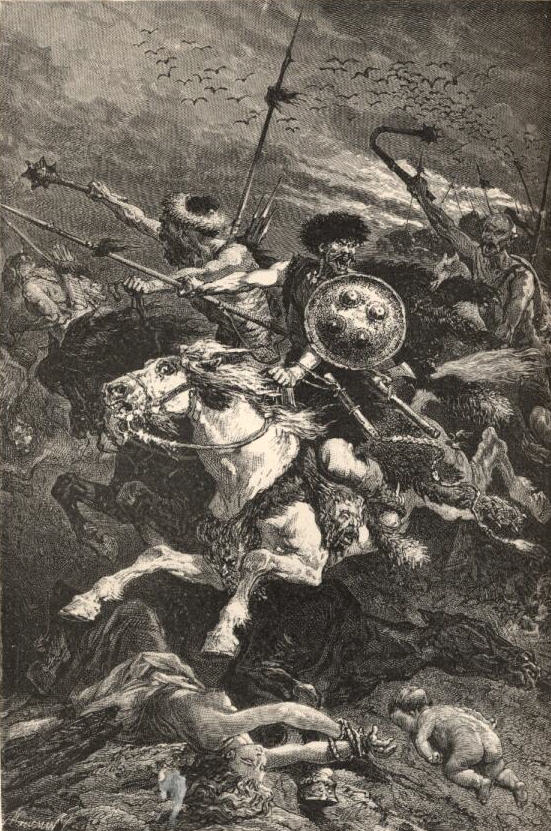
451 – Châlons. Attila the Hun is defeated by a combined Roman/Visigoth force, preventing him from dominating Western Europe. Into the vacuum steps Germanic culture and the Catholic Church, expressed by papal power in Rome.

732 – Tours. Muslim invaders, intent on spreading the religion of Mohammed, enjoyed unchecked success as they expanded their influence from India to Spain. At Tours, Frankish leader Charles Martel defeated a Muslim force commanded by Abd er-Rahman, ending the Muslim threat to Western Europe, establishing the Franks as dominate in Gaul and preparing the scene for Charlemagne.

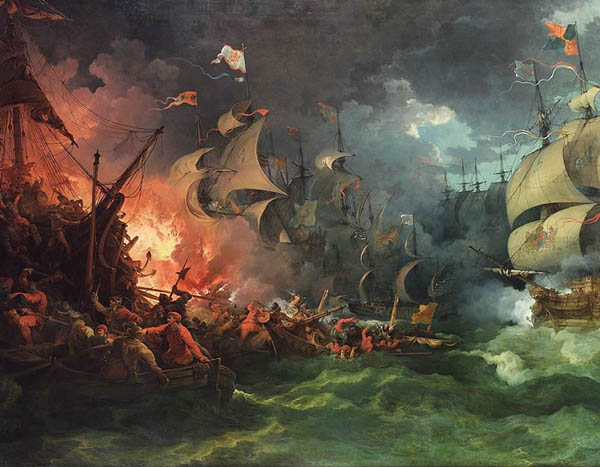
1588 – Spanish Armada. The Spanish, fueled by precious metals stripped from the Americas, achieved military and political hegemony in the 16th century. When England left the Catholic Church under Henry VIII, the Spanish became their sworn enemies; when English pirates began raiding Spanish galleons, threatening Spain’s financial windfall, the situation took on a new sense of urgency. In 1588, the Spanish, aided by the French, intended to invade England and forcibly reconvert the population. Stormy seas and a plucky English navy caused the destruction of almost half of the Spanish vessels and England not only survived, but rose to become the preeminent naval power in the world. With the Spanish badly weakened, the English decided to move rapidly into the colony business. England’s time had arrived.

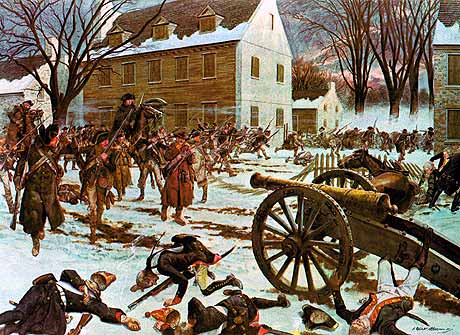
1776 – Trenton. In the fall of 1776, it looked like the American Revolution had failed. George Washington’s dwindling army seemed on the verge of disintegration, and the British relaxed for the winter, intending on finishing off whatever remained of the rebellion in the spring. Rather than watch his army die, Washington led a surprise attack on his enemy’s forward position in Trenton, New Jersey on Christmas night, 1776. What resulted was a stunning victory over Hessian mercenaries that changed the direction of the war and set the stage for the eventual ejection of the English from their American colonies.

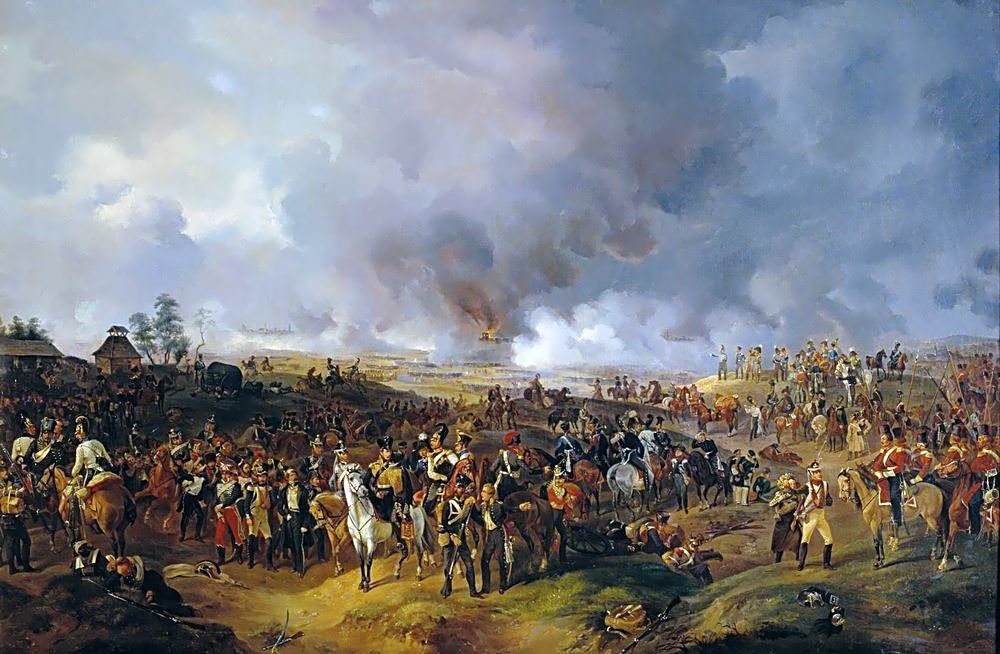
1813 – Leipzig. Napoleon, his army greatly weakened by losses the previous year during the Russian campaign, faced for the first time a combined allied army. At Leipzig Napoleon is defeated and forced to retreat to France; he will abdicate the next year, effectively ending his influence and dramatically shifting the balance of power in Europe.

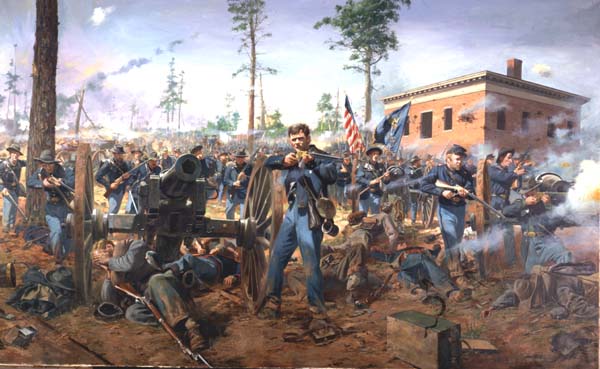
1864 – Atlanta. The summer of 1864 was the North’s darkest hour, as the bright hopes of springtime campaigns had been ground away to dark disappointment. U.S. Grant’s battles against Robert E. Lee in Virginia had been enormously bloody (over 50,000 new Union casualties) with no end yet in sight. In the South, William Tecumseh Sherman’s army sat outside of Atlanta with little hope of breaking its own deadlock. To the public, and more particularly to prospective voters that year, it looked as if Mr. Lincoln’s war might never end. Confederate President Jefferson Davis did the Union a favor that summer as he replaced the defensive-minded Joseph Johnston with the reckless John Bell Hood. Within weeks Hood had taken massive casualties and was eventually compelled to give up Atlanta. The Union victory there gave the electorate in the North the optimism they needed to reelect Abraham Lincoln, which doomed any Southern hopes for victory. At Atlanta, both the Confederacy and American slavery died forever.

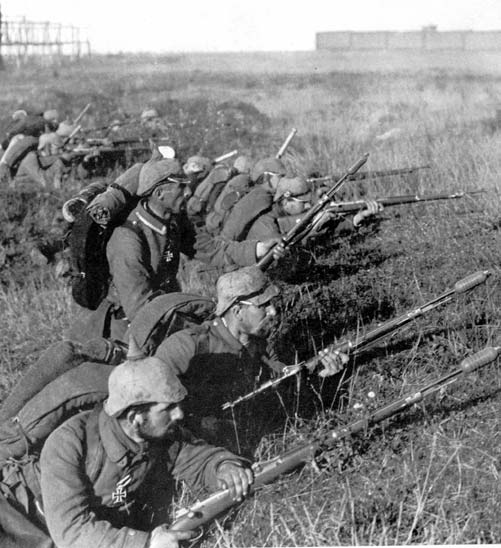
1914 – 1st Marne. One of the reasons Germany welcomed the start of the First World War was their absolute faith in the Von Schlieffen Plan, which they expected to result in the fall of France in no more than six weeks. (Don’t forget that the last time Germany and France fought, in the Franco-Prussian War of 1870-71, the Germans had won a resounding victory.) In August of 1914, in spite of tough resistance from the Belgians and a combined British-French defense, all was on schedule. What the Von Schlieffen Plan didn’t take into account though, was the logistical nightmare of trying to keep rapidly moving troops adequately supplied in a day when most ammunition and provisions were still carried in horse-pulled wagons. Losing confidence, German Chief of Staff Moltke changed the plan in mid-stream and exposed his army to attack. This the French did at the 1st Battle of the Marne. By the first week of September, the German Army had been halted, and both armies began to dig trenches in a line that would eventually extend to the North Sea. A war of rapid movement had suddenly become a nightmare in the trenches.

1940 – Dunkirk. At the end of May 1940, it was clear that the Nazis would conquer France; all that was left to be decided was whether the 400,000 British and French survivors could be evacuated to England, where the fight might go on. If the Germans could have entrapped and destroyed those troops, the Second World War might have ended that spring, as Britain would have had little but the Home Guard with which to defend their island. The evacuation, called Operation Dynamo, was aided by German hesitation and the heroic efforts of those on the thousands of boats that helped in the rescue. In addition, the RAF inflicted serious losses on the Luftwaffe as it harassed the troops on the beach. By the time the effort was called off on June 4, 338,000 men had been taken out of France and the Germans had lost 240 aircraft. Hitler would eventually realize that he could never have England, instead, he turned his attention to the Soviet Union – with disastrous consequences.

Winter Commencement, Regalia and The Mad Scramble for Graduation Tickets

In less than two weeks, I will publicly receive my undergraduate degree in History from UMBC. I officially graduated in August, and my diploma came in the mail in October, so, yes, to some degree (no pun intended), this event will be anti-climactic.

Still, I figured, why pass up a chance to celebrate one last time? It’s also a celebration for my wife and children, who had to endure the not-so-slight inconvenience of Dad returning to college. After a day of teaching History at Cardinal Gibbons School, rather than return home, I would head to UMBC for class. For me, taking classes was, for the most part, a blast. I loved my History classes, enjoyed my other Humanities classes and tolerated well the other GFRs. For them, it was a family often short one person.

Because they shared in my burden, it’s important that my wife and three children also share in the public culmination of that achievement. I would’ve liked for my parents to have been there also, but my father died seven years ago, and my mother’s back won’t allow her to sit through the ceremony (we’ll pick her up afterwards for the big-deal restaurant lunch we have planned). My mother-in-law, who I am very close to, also wants to be there, and I’d like her to be there too. This, however, is a problem.

If your commencement from UMBC is this Spring, it will be held at the 1st Mariner Arena (capacity 13,500). If your commencement is in December, it will be held in the Retriever Activities Center (capacity 4,000). This disparity in available seating creates a scarcity in graduation tickets, with each graduate receiving four tickets only. If you were doing the math one paragraph above, you now know my dilemma. I need one more ticket. (The university offers overflow seating in Lecture Hall III, where those voted off the island will have to watch by closed-circuit broadcast, but this is hardly an acceptable option for just one family member.)

The four tickets I was issued

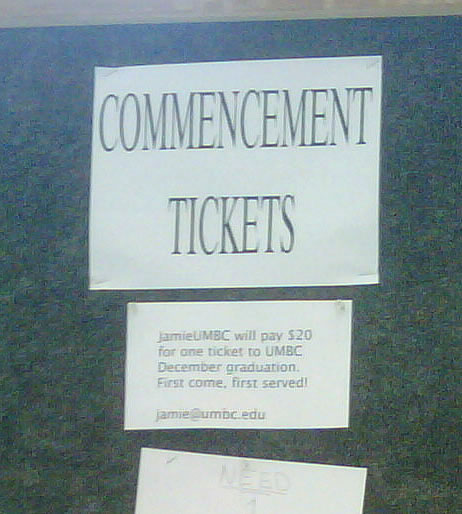
Obviously, I’m not the only person with this problem. Apparently there are so many graduates looking for tickets that the university has set up a bulletin board outside of the Bookstore. Here you can pin your desperate plea for extra tickets, in much the same way that prayers are inserted in the Western Wall in Jerusalem.

The Board of Faint Hopes

That's mine, right under the sign

(If anyone knows a December graduate with a ticket to spare looking to make an easy $20, please let me know.)

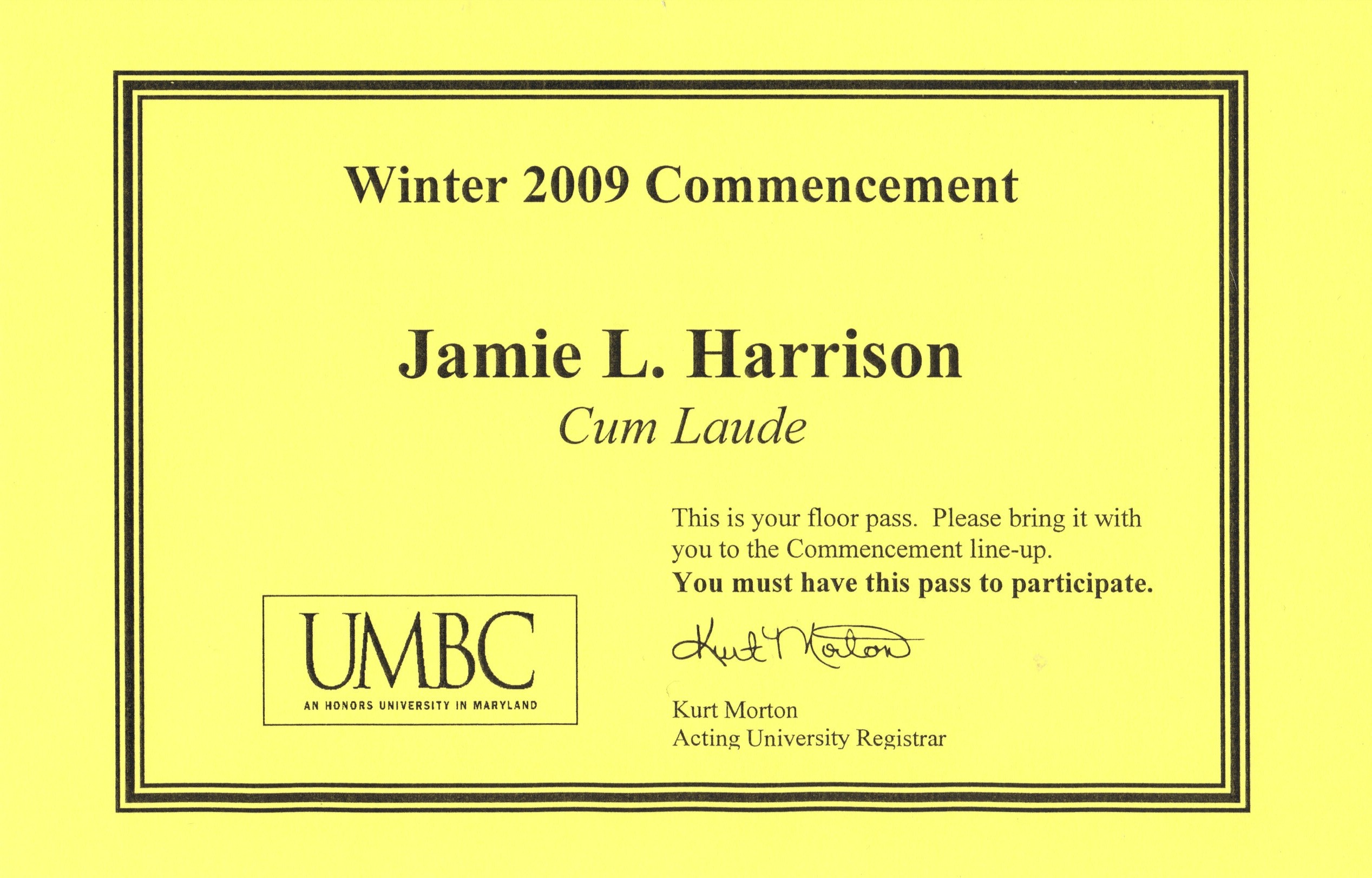
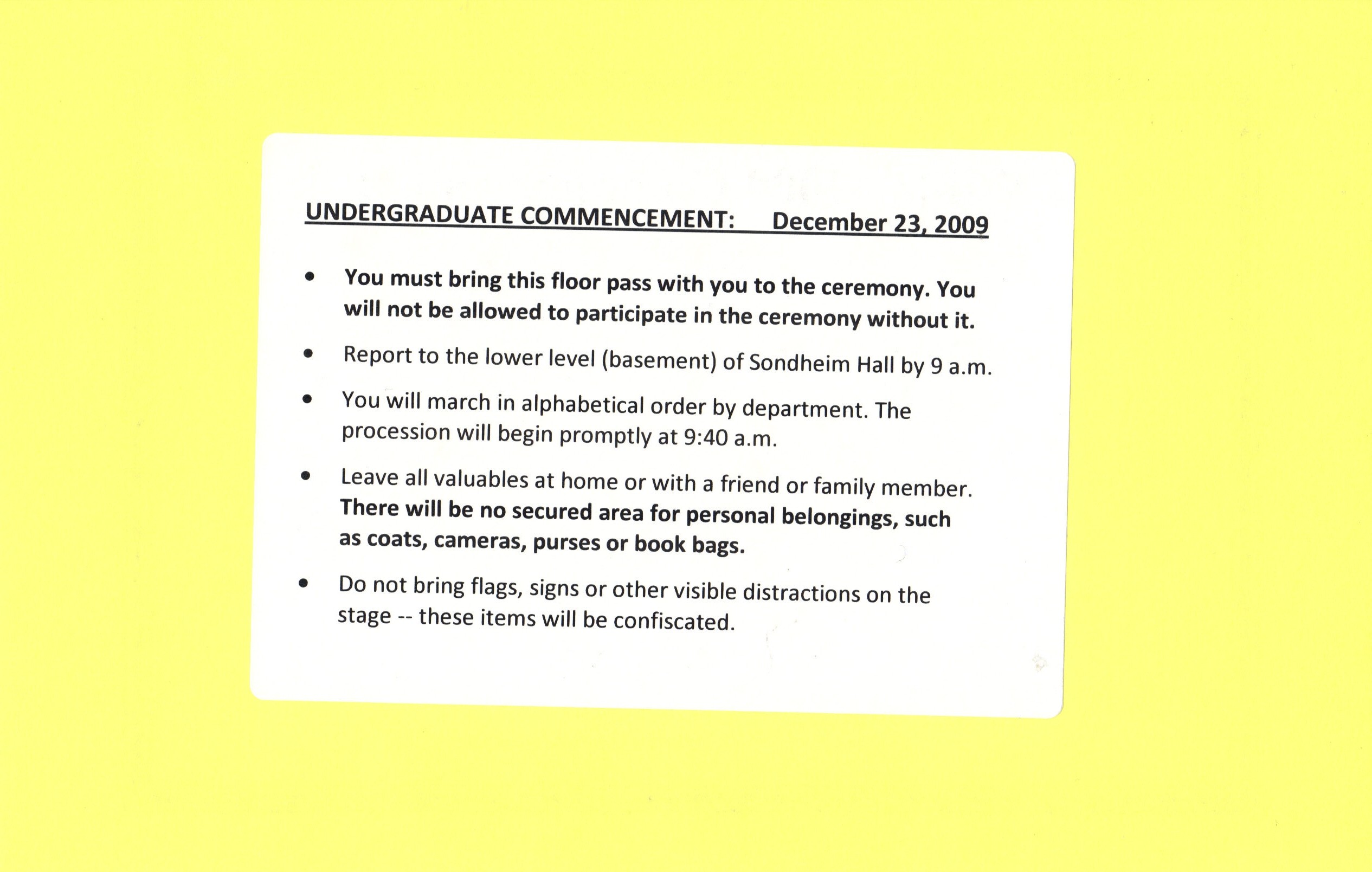
Also, I get a commencement pass of my own:

Front

Back

Another part of the commencement experience is the regalia. The regalia I’ve been given comes with a long black gown, a gold sash (signifying that I’m graduating with Honors), a tassel and a really strange cap. I’ve already tried on the cap at home, and there’s absolutely no way I can wear this cap without looking like a twit. I can’t figure out how the tassel is attached, or where it hangs.  As you can tell, I’ve never worn regalia.

My sixteen-year-old son Zachary is an excellent amateur photographer (he’s been published in multiple newspapers) and he’ll be bringing his good camera to the ceremony. I’ll also make my guests patiently wait so that I can have my picture taken with True Grit. (Again, how many times in my life will I get to do this?)

After that, we’ll head to my car (I’ll use student parking, since I have a student pass due to my Graduate Student status), pick up my mother and then it’s off to The Olive Grove in Linthicum, which has become the traditional celebratory restaurant for our family.

While we’re there, I’ll be preoccupied examining the digital photos on Zachary’s camera to see how idiotic I looked in that funky cap.

Top Ten Not-To-Be-Missed Christmas Shows

There are plenty of Christmas television specials and movies out there; how do you decide which ones to watch? Well, here are the ones I stay home for:

10. Elf – One of the few Will Ferrell movies I can sit all the way through. It’s cute, it’s funny, and Bob Newhart plays Papa Elf. Fortunately, I don’t have to make time for this movie, because it’s on sixteen separate cable channels every day during the month of December.

9. Scrooged – I detest remakes of A Christmas Carol that repeat what’s already been done better. I’m fine with versions that update the story or take it places where it hasn’t been. In this version, Bill Murray is a cynical, vicious television executive who gets the Dickens scared out of him by an excellent supporting cast, which includes John Forsythe and David Johansen (below with Murray).

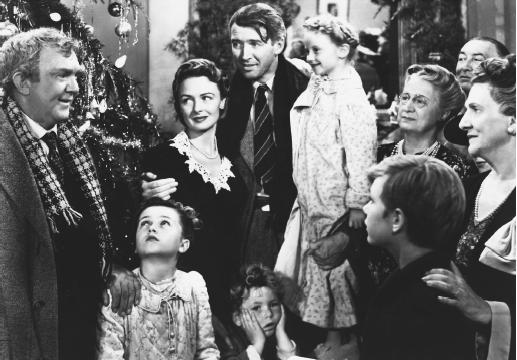
8. It’s A Wonderful Life – The 1946 Frank Capra classic. Yes, it’s a sappy story, but it reminds us of all the good we can do, and maybe already are doing, for the people around us every day. At this point it’s passed from being a film to being a Christmas tradition, which makes it immune to cinematic criticism.

7. Saturday Night Live Christmas – SNL has done a lot of really funny stuff over lo these many Christmases – none funnier than Steve Martin’s Christmas Wish.

6. A Christmas Story – I’ve never seen a film become iconic quite as quickly as did the story of Ralphie’s quest for the elusive Red Ryder Ranger Model Air Rifle. A huge bonus is the acting of Darren McGavin, who also played Carl Kolchak in the Night Stalker series. If you like this movie, you can see it for 24 hours straight on TBS.

5. Rudolph the Red-Nosed Reindeer – Debuting Christmas 1964, this is the claymation classic that started it all. As much as I enjoy Rudolph, every year Santa seems to become more and more of an insensitive jerk. If this were remade today, Rudolph wouldn’t run away, he’d sue Santa under the Americans with Disabilities Act.

4. Frosty the Snowman – A little song becomes an indelible part of our lives with the help of great voiceover performances from Jackie Vernon (Frosty), Billy De Wolfe (Professor Hinkle) and Jimmy Durante.

3. How the Grinch Stole Christmas! – Dr. Suess’ Christmas staple first appeared in December of 1966, complete with narration by Boris Karloff and singing by Thurl Ravenscroft, who was also the voice of Kellogg’s Tony the Tiger. Directed by Chuck Jones, of Tom and Jerry fame.

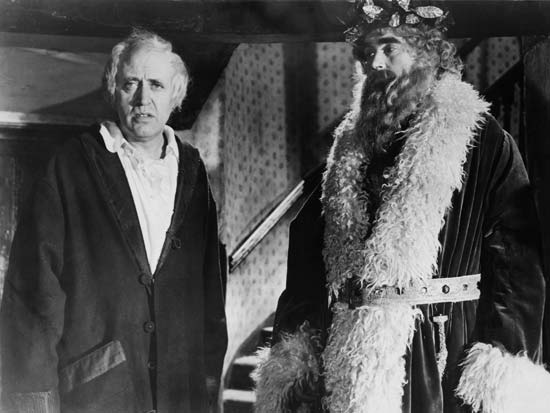
2. Scrooge (1951) – The definitive version of Charles Dickens’ A Christmas Carol, a brilliant cast headed by Alastair Sim set the bar so high that all other Scrooge films seem like disasters by comparison. The original was in black and white, but the colorized version really brings out the feel of London in the early 19th century. Another bonus is how close this version stays to Dickens’ text.

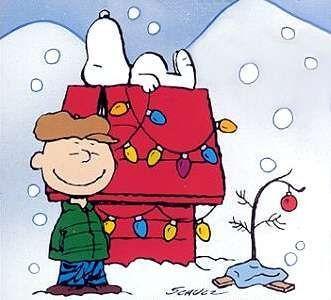
1. A Charlie Brown Christmas – For me, Christmas is in full swing when I hear Linus say, “That’s what Christmas is all about, Charlie Brown.” Released in 1965, when people weren’t afraid to quote the Gospel of Luke and some actually had aluminum Christmas trees illuminated by rotating color wheels, the message is about rejecting the commercialization of Christmas. If Rudolph created claymation holiday specials, Charlie Brown did the same for animation. [Irony Central: Let me say here how disappointed I am with ABC for cutting a full five minutes from A Charlie Brown Christmas last night so that they could squeeze in more commercials. Being the network that gets to broadcast “ACBC” is a sacred trust, which ABC violated for the sake of commercialism. Shame on you, ABC.]

Honorable Mentions:

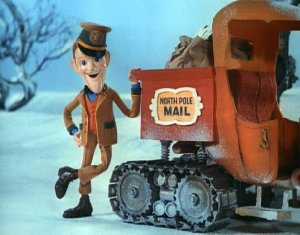
The Year Without a Santa Claus

‘Twas the Night Before Christmas

The Little Drummer Boy

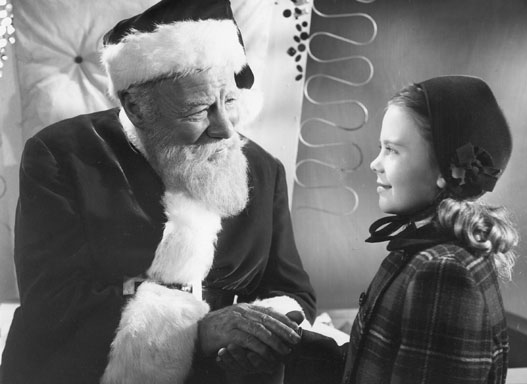
Miracle on 34th Street

Santa Claus Is Comin’ to Town

The Day The Music Died – For Me

We’ve all heard somber-sounding people on television or the radio asking the question: “Do you remember where you were when you heard about (insert traumatic event here)?”

For my parents, there was Pearl Harbor and then the assassination of John Kennedy. For most people of my generation, we have 9-11. But I think there exists a second category of psychic traumas, traumas that are not national ins cope, but are more personal, and leave their scars on a smaller, more targeted audience.

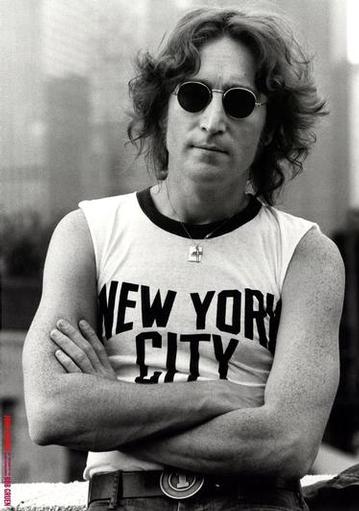
For me, the shooting death of John Lennon on December 8, 1980 falls into this category. I’ve always been a Beatles‘ fan, surrounded as I was by older brothers who were Beatlemaniacs (until I was 8, I was led to believe that all music was Beatles’ music). As I got older, I developed my own love for the Beatles, and for John Lennon’s music in particular. Being a sixteen-year-old in the winter of 1980, I guess I identified with Lennon’s rebellious nature, his brutal honesty and the raw truth in his lyrics. Lennon bowed to no one, and had a reputation as a troublemaker. All of this I found very appealing.

On the night of December 8, 1980, I spent a good deal of time tying up my parents’ telephone line in conversation with my best friend, Dave Padgett (that was how we communicated with each other back in the day). We laughed as we imitated Monty Python skits, in particular, The Piranha Brothers, and we talked about playing an elaborate practical joke on my brother Alan. It was a typical, nondescript Monday night.

Much of America heard about Lennon’s shooting on Monday Night Football. At that moment, however, I was in my family’s upstairs bathroom, having just finished washing my hair. As I was vigorously toweling it dry, my mother, who had been watching the Tonight Show with Johnny Carson in the living room, called to me that NBC News had just broken into the program to say that a Beatle had been shot. I rushed downstairs, telling myself that she must have misunderstood, that someone with a similar sounding name or something must have been shot. It had to be a mixup. When I got there, Johnny was back on the air, seeming completely oblivious to the incredible news (I didn’t realize that his show was taped).

Flipping around the few channels we had in 1980, I found a reporter in front of Lennon’s building in New York, the Dakota, with a growing crowd behind her. As the taped interviews with witnesses and the updates from Roosevelt Hospital came in, it became clear: John Lennon was dead. I called Dave, who hadn’t been watching television. We hung up quickly to watch the coverage, which alternated between reporters at the hospital and the chaotic, sad scene outside the Dakota. By 1 AM, there were literally thousands of people gathered around Yoko’s building, singing John’s songs, hugging and weeping.

Radio stations of all formats immediately switched to all-Beatles programming, and I stayed up all night, listening to the music, listening to the tributes, listening to the DJs struggle to make sense of it all. It was strange, but I kept checking the newscasts, almost believing that there was still a chance that it was all a mistake, but the facts remained unchanged. John Lennon was dead, killed by a mentally ill fan. We later found out that Lennon had signed a copy of Double Fantasy for his killer, Mark David Chapman, earlier that evening, and the moment had been captured by an amateur photographer:

At school the next day, Dave and I made plans to travel to New York for what was certain to be a massive public funeral. As it turned out, there would be no funeral. Instead Yoko opted for ten minutes of silence on Sunday the 14th; it is said that tens of millions stopped to observe it.

During that week, it seemed like every magazine featured a tribute to John Lennon, and I wondered how much money was made from the grief.

For my part, I kept reading newspapers, listening to the radio tributes and talking to Dave. I sent a short letter to Yoko expressing my feelings of loss, knowing that it was one of a million letters she’d never see. It all seemed surreal.

Over the next few weeks, it felt like we struggled to place John Lennon in context. Was he a pop superstar, a troubled poet, a rebel rocker, a peace activist, or a feminist house husband? How could we label him for easy, convenient packaging? Lennon reinvented himself so often it was hard to pin him down. I remember DJs starting to refer to him as “The Master,” as if he required a label (maybe because Elvis was “The King?”). Thankfully, the attempts to label John Lennon soon passed. The selling of John continues unabated, however, and I expect that he will be redefined and repackaged by each succeeding generation; such is the price of immortality.

For me, though, it was more personal than that; I felt robbed of Lennon’s future almost as if it were my own. I recall being in a record store in Lansdowne soon after and overhearing two middle-aged women discussing the tragedy. They were tsk-tsking it, saying what a shame it was. You have no idea, I remember thinking. You have no idea.

UMBC Slogan Contest Analysis

First a new mascot, now a new slogan!

The good folks at Project Black and Gold have selected eight candidates (out of 137 submissions) for us to vote on at MyUMBC. They are:

  • “Be Proud, Be Bold, Be Black and Gold”
  • “Black and Gold, Breaking the Mold”
  • “Great Dogs Aren’t Just Born, They’re Bred”
  • “In Dog Years, We’re almost 200!”
  • “Raise The Ruff!”
  • “Retrievers, Ruff and Ready!”
  • “UMBC: Where Every Dog Has Its Day”
  • “Woof!”

In examining this group, it seems as if there was a definite push amongst the judges to make the slogan somehow dog-centric – six of the eight possibilities make a canine reference. Let’s examine these first.

1. “Great Dogs Aren’t Just Born, They’re Bred” – This one sounds promising, except that I’m not exactly sure what it means. Isn’t breeding the process by which puppies are born? I guess the point here is that we (great dogs) are not the result of random dog fornication, but rather a carefully coordinated reproductive effort to produce a purebred offspring. I don’t know about you, but this slogan makes me feel uncomfortable in mixed company. Pass.

2. “In Dog Years, We’re almost 200!” – I’m confused. Isn’t UMBC over 40 years old? And aren’t dog years seven times human years? Doesn’t that make us about 300 in dog years? In any event, this attempt is cute, but certainly not slogan-worthy.

3. “Raise The Ruff!” – Another cutesy dog reference. This might be nice on a poster at a basketball game, but it’s  too lightweight to be the entire campus’ slogan. Also, it’s almost exclusively a sports slogan. Do we really want to “raise the ruff” in engineering?

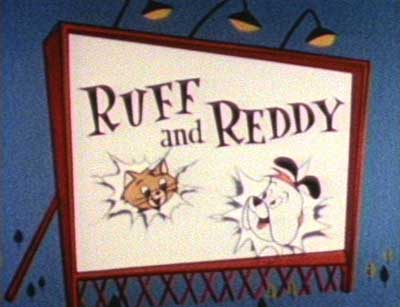
4. “Retrievers, Ruff and Ready!” – Again with the “ruff” reference. I like the alliteration, but I can’t get by my childhood memories of “Ruff and Reddy,” a no-frills 1960s cartoon that, in reruns, was a staple of “Cartoon Carnival.” It was about a dog (Reddy) and a cat (Ruff) who had adventures together for a season or two. One thing I remember clearly about the show was that the dog was a moron, which taints my view of this slogan. The best part of “Ruff and Reddy” by far was the catchy theme song.

5. “UMBC: Where Every Dog Has Its Day” – In this slogan, it is insinuated that even hapless losers can succeed at UMBC. Pass.

6. “Woof!” – Really? That’s it? Our university is to be represented by an onomatopoeia -in this case, the sound a dog makes when it wants to go outside to urinate? Really? I think not.

Having worked our way through the six canine slogans, we are left with the two more generic slogans:

7. “Black and Gold, Breaking the Mold” – I like the rhyming, and I like the idea that UMBC is unique. I could live with this, I’m just not sure that it says enough.

8.  “Be Proud, Be Bold, Be Black and Gold” – Of all of the candidates, this is the one I like the most. It doesn’t just rhyme, it actually comes with its own rhythm. It also urges us to take positive action, and it identifies those actions as emblematic of the Black and Gold. It’s versatile enough to be applied to any university activity, but it could also work as a chant in the RAC on game day. I can even see variations on tee shirts and hoodies. “Proud. Bold. Black & Gold.” Nice.

Voting is on MyUMBC until December 18.

Pearl Harbor: A Date That Is Being Rapidly Forgotten

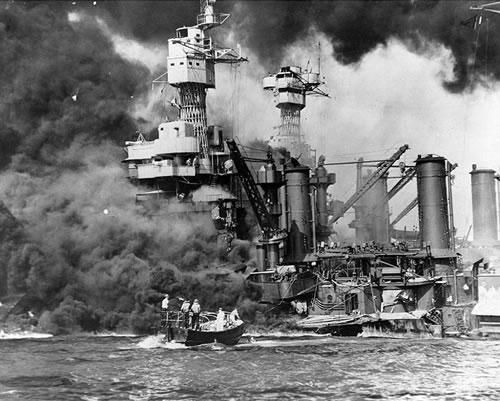
Sixty-eight years ago today, your grandparents’ generation had their 9-11 moment. On that day, the Empire of Japan decided to sucker-punch the United States Pacific Fleet, stationed at Pearl Harbor near Honolulu, Hawaii. The Japanese military leadership hoped that by destroying America’s naval presence in the Pacific, they could bully the United States into accepting Japanese hegemony in the Far East. This would allow their aggressive expansionism to continue unchecked.

The attack began at 11:55AM Eastern time (6:55AM local time), with the aerial bombing beginning almost an hour later. The Americans at Pearl Harbor were taken by surprise, and nearly 3,000 were killed. The destruction was nearly complete: 4 battleships sunk; 4 battleships damaged including 1 run aground; 2 destroyers sunk, 1 damaged; 1 other ship sunk, 3 damaged; 3 cruisers damaged; 188 aircraft destroyed, 155 aircraft damaged; 2,345 military and 57 civilians killed, 1,247 military and 35 civilians wounded.

The United States, however, was fortunate on this day. The decisive weapon of the war in the Pacific would not be battleships, but aircraft carriers, and the American carriers were out to sea when the Japanese struck, and thus they survived. What the attack had accomplished more immediately, however, was to thrust the United States into the Second World War.

For the next six months, the Japanese Empire ran amok in the Far East, capturing nations at will as the United States at first reeled, and then began to build the most formidable war machine in human history to that point. By the summer of 1942, the United States had begun the process of taking the fight to the Japanese, winning two stunning victories at Coral Sea and Midway. From then on, the Japanese were on the defensive. But on December 7, 1941, Americans didn’t know how things would turn out.

Many expected a Japanese invasion of the West Coast; any American with an Oriental look about them was soon considered suspect. Many whites had no time for subtleties  -to them, they all looked like the guys flying Zeros at Pearl Harbor and Midway. Not long after this, the internment order for Japanese-Americans would be issued.

For my father, then a seventeen-year-old living at St. Mary’s Industrial School on the present site of Cardinal Gibbons School, the entry of the United States into the war brought him to enlist in the Marines. He would eventually be wounded on the Japanese island of Okinawa in 1945, but lived to tell the tale. He quickly recovered and would have been part of the invasion of the Japanese mainland had not the atomic bomb ended the war. For this, I probably owe my existence, because conservative estimates put American casualties in Japan at around one million.

Marines on Okinawa

The day after Pearl Harbor, President Roosevelt said that the date would “live in infamy.” For many younger Americans, the date has already lost its meaning, and the future looks bleak as less than 50 survivors of the attack remain. Soon, there will be no one to recall the events of that day, and we will become dependent on books, photographs and films.

But today, while we still have them here, let’s not pass up a chance to pause for a moment or two and recall their 9-11 moment, just as we hope that sixty years from now, our grandchildren will be able to recall ours.

Woman Goes to Jail For Movie Piracy After Taping “Twilight: New Moon” at Sister’s Birthday Party

Samantha Tumpach, pirate

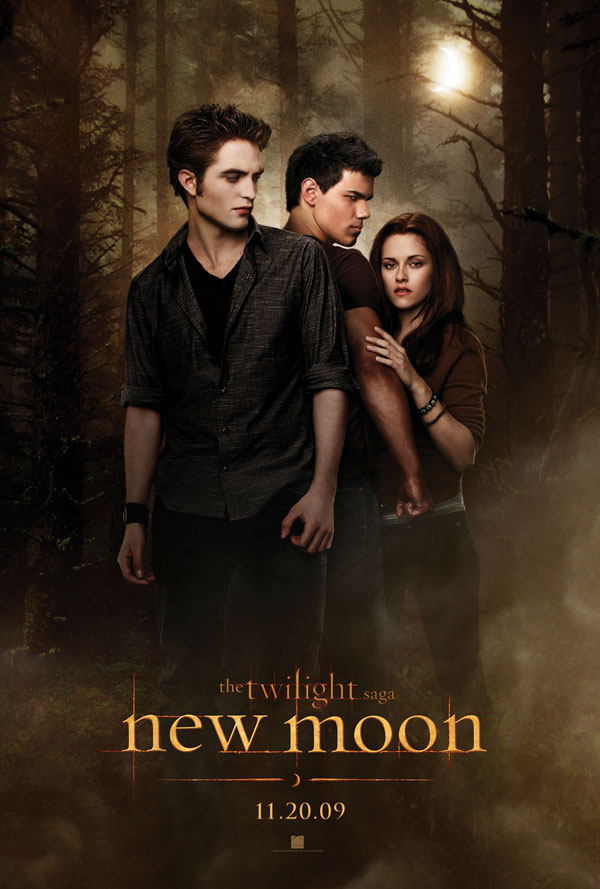
According to the Chicago Sun-Times, a 22-year-old Chicago woman spent two nights in jail after taping three minutes of “Twilight: New Moon” while at her sister’s birthday party. Samantha Tumpach brought her new digital camera to the Muvico Theater in Rosemont, Illinois in suburban Chicago, where the party was being hosted. According to Tumpach, ushers said nothing as she snapped photos and recorded partygoers singing “Happy Birthday,” but rushed to report her to management when they noticed her camera pointed at the movie screen.

Police were called, and theater management demanded that Samantha be arrested. Because it was a Saturday, she could not be arraigned until Monday – after having spent two nights in a Rosemont jail. The police who handcuffed the young woman and led her away seemed very sympathetic, according to Tumpach, but since the theater manager insisted on pressing charges, they had no choice but to haul her off to a cell. Charged with felony criminal use of a motion picture exhibition, she was released Monday morning on her personal recognizance. If convicted, Samantha faces up to three years in prison.

As far as I know, however, her legal troubles are unrelated to her decision to host a birthday party at a showing of “Twilight: New Moon.”

Ranking the Most Important Constitutional Amendments (post-Bill of Rights)

For today’s History List, I look at the lesser known amendments to our constitution that were ratified after the Bill of Rights. (Everyone knows the 1st and 5th amendments, but what about the 23rd?) I rank them as to how important they are today, not necessarily how important they were at the moment they were ratified.

And away we go:

1. 13th Amendment – Ratified almost immediately after the end of the Civil War, this abolished slavery in the United States, removing America’s original sin and fundamentally changing the nation’s character. Without this, the United States would have lacked the moral gravitas to act as a force for civil rights around the world.

2. 14th Amendment – Makes the citizenship of former slaves part of the constitution, removing any potential legal challenges or clever legislative devices to deny the benefits of freedom to those formerly held as slaves. This amendment was largely a reaction to the attempts of Southern states to so restrict the movements and activities of African-Americans as to return them to something very much like slavery.

3. 15th Amendment – Makes it unconstitutional to restrict voting based on race. Another Reconstruction amendment codifying the rights of former slaves.

4. 19th Amendment – Makes it unconstitutional to restrict voting based on gender. Giving women the right to vote took until 1920 – fifty years after African-Americans got the vote. (More info here, courtesy of Ana’s intrepid research: https://www.yourlawyer.com/library/19th-amendment-womens-suffrage-movement)

5. 24th Amendment – Another voting rights act, this time making it unconstitutional to compel voters to pay a tax in order to vote. These “poll taxes” were applied to Southern blacks as a way to discourage their voting. This amendment wasn’t passed until 1964, almost 100 years after the Civil War.

6. 16th Amendment – Allows a federal income tax. We may hate it, but this is how the massive machine that is our government gets paid for.

7. 12th Amendment – In the election of 1800 Thomas Jefferson and Aaron Burr, running mates in the Presidential election, tied in electoral votes. (In those days, vote-getter #1 became President, while the runner-up became Vice-President.) The contest went to the House of Representatives, where Burr almost wrested the presidency from Jefferson.  This amendment straightened out the process, making it clear to electors who was running for President and who was running for Vice President.

8. 17th Amendment – United States Senators used to be selected by state legislatures. This amendment elects them by a direct vote of the people.

9. 21st Amendment – repeals the 18th amendment (prohibition of alcohol), ending the gangster era and bringing drunkards out of closet.

10. 22nd Amendment- Ratified in 1951 as a response to Franklin Roosevelt being elected four times, this amendment restricts the President to two terms of office. This amendment had the unintentional effect of making every two-term president a “lame duck,” with limited power and influence. In reality, a president has a term and a half to get his agenda passed, after that, forget about it.

11. 25th Amendment – Clarified the order of Presidential succession. Here it is, in case you were wondering:

Office Currently Held By
1 Vice President Joe Biden
2 Speaker of the House of Representatives Nancy Pelosi
3 President pro tempore of the Senate Robert Byrd
4 Secretary of State Hillary Clinton
5 Secretary of the Treasury Timothy Geithner
6 Secretary of Defense Robert Gates
7 Attorney General Eric Holder
8 Secretary of the Interior Ken Salazar
9 Secretary of Agriculture Tom Vilsack
10 Secretary of Commerce Gary Locke
11 Secretary of Labor Hilda Solis
12 Secretary of Health and Human Services Kathleen Sebelius
13 Secretary of Housing and Urban Development Shaun Donovan
14 Secretary of Transportation Ray LaHood
15 Secretary of Energy Steven Chu
16 Secretary of Education Arne Duncan
17 Secretary of Veterans Affairs Eric Shinseki
18 Secretary of Homeland Security Janet Napolitano

12. 26th Amendment – In 1971, the voting age was dropped to 18, immediately causing millions of young Americans to ignore it.

13. 11th Amendment – Prevents states from being sued by citizens. Can you imagine how hopelessly clogged our court system would be if you could sue the government?

14. 23rd Amendment – In 1961, the voters of Washington, D.C. finally got included in the Electoral College. Democrats have been thankful ever since.

15. 27th Amendment – This amendment, which was only ratified in 1992, says that any Congressional pay raise (or decrease) cannot take effect until the next Congress is seated. In 1873, Congress tried to give themselves a 50% pay raise, backdated to the beginning of their terms! This ruse failed when the public caught wind of it.

16. 20th Amendment – Presidents used to be sworn in on March 4th, but with travel being much faster than it was in Washington’s day, this amendment changed the date to January 20, with Congress being sworn in on January 3.

17. 18th Amendment – (Prohibition of alcohol) This amendment tried to legislate morality and failed, giving rise to an era of speakeasies, gangsters and classic movies about speakeasies and gangsters. The 21st Amendment repealed it.